Category: Break the Chains

In order to be free we must unlearn what we have learned.

  • United States of America INC.Registered in Delaware as a Religious Non Profit Corporation

    United States of America INC.Registered in Delaware as a Religious Non Profit Corporation

    If you’ve been wondering how the Pope Francis recent Apostolic Letter regarding the Roman Curia law removing legal immunity and liability from governments, attorneys and judges, might affect governments around the world, then read on. I got many inquiries asking for how a Roman law can affect an ostensibly secular government.  And that’s a far enough question…and I couldn’t remember the exact reason in law why that was true, so I asked a friend who I knew would know.

    I got this reply from a friend well versed in law and the history of the legal systems:

    It pre-dates this but in looking to John the Noble (King John) before the Magna Carta, He was trying to break away from the Vatican back in the middle ages, I can get dates later.

    [The] Pope … stuck King John’s balls to the fire with the king’s nobles by threatening to excommunicate him and all of England if he did not pledge fealty to the Papal SEE (and money- land).

    The nobles threatened to wage war to dethrone him. He caved. Hence the Papal SEE took over the title to the land of England and its wealth. From that sprang the Magna Carta several hundred years later.

    In fundamentals of law class I learned that Roman Law is a foundation of modern law (not Natural Law –  2 different entities). Later on Church law became the overseer of that existing law. Papal Bulls took over around 1455 which is much like the current Executive Orders each succeeding tyrant signs to circumvent the constitutional; based law here.

    I knew the deed for Washington DC was held at a Catholic Diocese (read thread found HERE):

    ….from the D&B sponsored Mantra Corp website, linked below:
    If you click on the “Government of the United States HQ” link, you’ll see another website page with some fairly detailed—and possibly bewildering—information. For example, you’ll see that this “Government of the United States” has its address at:“The U.S. Capitol“Washington, DC 20515-0001”Its phone number is “(202) 224-3121”. Business Hours are “24/7”.You can click the “map” link and see a graphic indicating that this “Government” is located on “Capitol Hill” (same place as Congress) in Washington DC.None of that seems particularly surprising (other than the idea that our “Government” might be a “company” and/or a conglomerate of “companies”). But the Manta.com report does begin to seem a little strange under the heading “About Government Of The United States” where we read:“government, owner Archbishop Deric R. McCloud of Basilica Shrine, Michigan and 4th NE Street, Washington,DC”. 

    I wasn’t aware the purported “government” was registered as religious non-profit corporation in Delaware. This was sent to me today… given the above it’s really not surprising I suppose….but here it is in black and white!


    USA INC Corp Registration in Delware


    ~by American Kabuki

    Share
  • Must Watch Interview

    Must Watch Interview

    wtop_logo_MED


    Karen Hudes explained that changes are imminent, and that the Cabals are over.

    Share
  • How the UCC Took All Over The World

    How the UCC Took All Over The World


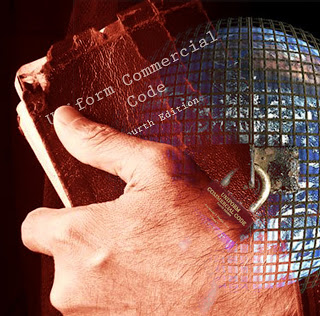
    UCC4thedSeeing through the Mud

    ”I send you out as sheep in the midst of wolves, be wise as a serpent and harmless as a dove.” – Howard Freeman

    The clarity afforded the average Joe when it comes to applying the Law to his advantage is about as clear as mud pie; no transparency. The methods presented in the following are more passive ways of dealing with our legal system, basically by ‘boxing the judge in a corner.’ Now I personally have not tried any of this, however I see the value in this approach. Instead of having to go into court guns blazing I just ask honest questions transparently and the rest just falls into place.

    There are some amazing warriors out there in the field of Freeman techniques, Dean Clifford is an example. Sometimes, the system is so corrupt there is no choice but to be the Warrior; and jail time may be the result. Dean has many different approaches and is willing to invoke the Warrior, and like most, humble warriors would rather avoid conflict – settle out of court. In the Harmless as a Dove approach, we are asking questions in a cooperative manner, we genuinely want them to reveal themselves but because their system is so dependent on secrecy they will want to avoid disclosing their fraud.
    Here we have a lot of conceptual clarity. Howard Freeman, does a wonderful job at articulating the concepts in plain English making this understandable; from my point of view.

    Howard Freeman reveal’s:

    – The story behind why the UCC “secretly took over” all legal/lawful matters on the planet;

    – How the UCC works to resolve agreements instead of contracts;

    – How to reserve your rights under the UCC;

    – How to dispel presumptions in court; with examples and scenarios.

    Because of the Bankruptcy of the United States, Inc. in 1933 we have been “keeping tabs” of all our “debts” using accounting and negotiable instruments. I refer to this as an ‘Global Financial System’ or ‘IOU system’ and use terms to describe the concepts involved but this whole idea is very cryptic. The words Statements and Bills mean something completely different under Commerce then they do in our everyday usage. Winston Shrout has a powerful grasp of this knowledge. Lets look at the definition of a negotiable instrument from the UCC:

    § 3-104. NEGOTIABLE INSTRUMENT.(a) Except as provided in subsections (c) and (d), “negotiable instrument” means an unconditional promise or order to pay a fixed amount of money, with or without interest or other charges described in the promise or order…
    As you can see “promise or order to pay a fixed amount of money” means the same as an IOU.

    I.O.U. ∞ $ Infinity plus Interest


    IOU

    This ‘Global Financial System’ is similar to a global IOU system, because no lawful money exists – we exchange IOU’s and never actually “settle the accounts” with real money. Lawful money is backed by real things. Before 1933, you exchanged a gallon of milk for a dollar, which is a promise to pay gold or silver; real value for real value. Now, because the US Dollar is the global reserve currency, based on fractional reserve banking that requires interest to be imposed constantly on the debtor’s, all nations and all over the world are forced under this IOU system with infinite debt due to interest for our children’s children. Under this system, you exchange a gallon of milk for a promise to pay “nothing plus interest”, thats what money became after 1933. Final point, since the money is worthless, literally and lawfully, but you exchange something of real value your it – your labor – we are getting scammed at a phenomenal rate! It is Literal slavery.

    Normal contract law could not function – there was no way to actually provide consideration for services under Common Law and Equity Contracts without lawful money. Since Common Law (criminal) and Equity Law (contracts) require remedy or exchanges of real value, the entire ‘Justice System’ was turned upside down. A new system needed to be created which appeared lawful, but was not in any true sense – as long as there was a presumption of true law (colorable), the average joe would be none the wiser. This is the system we know to today as UCC, the Uniform Commercial Code.

    The UCC deals with presumptive agreements, instead of true contracts which have full transparency; and knowing willing and intentional consent of all parties involved. Instead of contracts being enforceable only if all parties agreed knowingly, willingly and intentionally, now Agreements can be enforced based on essentially cured statements or presumptions. If I make a ‘ presumptive statement’ with ‘material evidence’ – a bill from your creditor with some numbers on it that ‘suggests’ a contract exist – and you do not rebut this statement, it cure’s under the UCC given a period of time.

    This portion of the Julian’s Debt Contesting Experience – OPPT Success Stories describes the concept:

    A contract requires transparency and agreement of the parties involved. Did you sign with your wet ink signature making a new contract with this third party? No you did not and the way they get around that is by asking for you to send them payment, even if it is very small. This creates a legal (but now lawful) basis for contract which they can then try and use against you. Legal but not lawful? How does that make sense, lets take a look.

    The legal basis is referred to as Tacit Procuration. Tacit means:
    Understood or implied without being statedand Procuration means:

    The act by which one person gives power to another to act in his place, as he could do himself. A letter of attorney.

    Procurations are either express or implied; an express procuration is one made by the express consent of the parties; the implied or tacit takes place when an individual sees another managing his affairs, and does not interfere to prevent it.

    Consent for Procurations can be ‘implied’ by failure to respond or ‘stand up and state otherwise.’ Given these meanings what we can understand is FAILURE to respond is CONSENT. We must REBUT the PRESUMPTIONS that this new third party has any claim to the debt. Contesting the debt with a written statement is, in law, absolutely effective as a means of rebutting the presumptions and REMOVES the IMPLICATION that this undisclosed third party may have PROCURED the claim on the debt by TACITUS means.

    It is unlawful because in order for a contract to be binding and enforceable there must be a “meeting of the minds” or full disclosure and transparency. A-party to a contract that sells off their interest to a new party without the express consent of ALL parties involved (which means your explicit consent) is unenforceable in law, unless you unwittingly allow them Tacit Procuration by NOT rebutting their presumptions and responding to their offer to contract.

    Under the UCC you must assert your rights in advance of any presumptive circumstance in order to secure them. What is a presumptive circumstance? When you are pulled over and you hand the Police Officer your Corporate Identification documents (your drivers license) there is presumption you are working for the United States, Inc, are an agent of government, knowingly consenting to be subject to ALL Statues and Rules under their Corporate system. Its as if you are saying: “because I wear Nike shoes I work for Nike and have to follow the rules as an employee of Nike.”

    “I reserve my rights WITHOUT PREJUDICE UCC 1-308″

    This is the state of affairs on planet earth. Deceptive acts and practices. It is this same system that the now reconciled One Peoples Public Trust used to foreclose on all banks and Corporations masquerading as Government in late 2012.

    A statement of “I reserve all my rights without prejudice UCC 1-308″ prevents any presumptive contracts from being asserted; however actually using this can be more complex. One should be well prepared with key knowledge and understanding before trying to apply anything that goes against the grain – in my opinion. It is important to understand our society is based mainly on these presumptive offers to contract. The IRS is a prime example of an unlawful presumptive organization. It asserts the presumption you are a taxpayer when under all the Statues of the US we are tax payers and only pay taxes by government granted privilege; i.e. you are an agent of government or you are earning income in a way that was enabled by the government (tax shelter from foreign earned income for example).

    Here is what Without Prejudice UCC 1-308 means from the UCC:

    § 1-308. Performance or Acceptance Under Reservation of Rights.

    (a) A party that with explicit reservation of rights performs or promises performance or assents to performance in a manner demanded or offered by the other party does not thereby prejudice the rights reserved. Such words as “without prejudice,” “under protest,” or the like are sufficient.

    The method of articulation seems intentionally cryptic – they are trying to hide the meaning in plain sight; lets analyze. “Explicit reservation of rights” means, you make a statement, just like they make statements, that your rights are totally yours without any presumption to the contrary. “Performs or promises performance or assents to performance in a manner demanded or offered by the other party” means, if you get duped or coerced into an agreement – even if you were not aware of it – the agreement will not be enforceable under the UCC system, if you assert your rights beforehand – “without prejudice UCC 1-308.”

    There are presumptions to contract everywhere in society. The UCC is designed to be based on statements, which go un-rebutted, and then become enforceable. Transparency is your friend. And as we often say here on SITS: Know Thyself. Be aware of who you are and how that BEingness extends outwardly everywhere. There is only ONE of us after all and this one makes up all things. You are your greatest asset and investing in the knowledge of yourself and how that relates to this world you live in and how it works will be your greatest tool.

    – Justin

    THE UCC CONNECTION

    FOREWORD

    This is slightly condensed, casually paraphrased transcript of tapes of a seminar given in 1990 by Howard Freeman. It was prepared to make available the knowledge and experience of Mr. Freeman in his search for an accessible and understandable explanation of the confusing state of the government and the courts. It should be helpful to those who may have difficulty learning from such lectures, or those who want to develop a deeper understanding of this information without having to listen to three or four hours of recorded material.

    The frustration many Americans feel about our judicial system can be overwhelming and often frightening; and like most fear, eventually, with the seemingly tyrannical power of some governmental agency and the mystifying and awesome power of the courts. We have been taught that we must “get a good lawyer,” but that is becoming increasingly difficult, if not impossible. If we are defending ourselves from the government, we find that the lawyers quickly take our money, and then tell us as the ship is sinking, “I can’t help you with that – I’m an officer of the court.”

    Ultimately, the only way for us to have even a “snowball’s chance …” is to understand the RULES OF THE GAME, and to come to an understanding of the true nature of the Law. The attorney lawyers have established and secured a virtual monopoly over this area of human knowledge by implying that the subject is just too difficult for the average person to understand, and by creating a separate vocabulary out of English words of otherwise common usage. While it may, at times, seem hopelessly complicated, it is not that difficult to grasp – are lawyers really as smart as they would have us believe? Besides, anyone who has been through a legal battle against the government with the aid of a lawyer has come to realize that lawyers learn about procedure, not about law. Mr. Freeman admits that he is not a lawyer, and as much, he has a way of explaining law to us that puts it well within our reach. Consider also that the framers of the Constitution wrote in language simple enough that the people could understand, specifically so that it would not have to be interpreted.

    So again we find, as in many other areas of life, that “THE BUCK STOPS HERE!” It is we who must take the responsibility for finding and putting to good use the TRUTH. It is we who must claim and defend our God-given rights and our freedom from those who would take from us. It is we who must protect ourselves, our families and our posterity from the inevitable intrusion into our lives by those who live parasitically off the labor, skill and talents of others.

    To these ends, Mr. Freeman offers a simple, hopeful explanation of our plight and a peaceful method of dealing with it. Please take note that this lecture represents one chapter in the book of his understanding, which he is always refining, expanding, improving. It is, as all bits of wisdom are, a point of departure from which to begin our own journey into understanding, that we all might be able to pass on to others; greater knowledge and hope, and to God: the gift of lives in peace, freedom and praise.

    “I send you out as sheep in the midst of wolves, be wise as a serpent and harmless as a dove.”
    INTRODUCTION

    I was asked to testify in a tax case as an expert witness. After many days of preparation, I felt confident of my research. I spent over 30 minutes presenting many Supreme Court decisions that supported the defendant’s position. The prosecution concluded his statements, and to my amazement, the judge told the jury that they could only consider certain facts, none of which were the facts I had given.

    As soon as the trial was over I went around to the judge’s office and he was just coming in through his back door. I said, “Judge, by what authority do you overturn the standing decisions of the United States Supreme Court. You sat on the bench while I read that case law. Now how do you, a District Judge, have authority to overturn decisions of the Supreme Court?” He says. “Oh, those were old decisions.” I said, “Those are standing decisions. They have never been overturned. I don’t care how old they are; you have no right to overturn a standing decision of the United States Supreme Court in a District Court.”

    PUBLIC LAW V. PUBLIC POLICY

    He said, “Name any decision of the Supreme Court after 1938 and I’ll honor it, but all the decision you read were prior to 1938, and I don’t honor those decisions.” I asked what happened in 1938. He said, “Prior to 1938, the Supreme Court was dealing with Public Law; since 1938, the Supreme Court has dealt with Public Policy. The charge that Mr. S. was being tried for is a Public Policy Statute, not Public Law, and those Supreme Court cases do not apply to Public Policy.” I asked him what happened in 1938? He said that he had already told me too much – he wasn’t going to tell me any more.

    1938 AND THE ERIE RAILROAD

    Well, I began to investigate. I found that 1938 was the year of the Erie Railroad v. Tompkins case of the Supreme Court. It was also the year the courts claim they blended Law with Equity. I read the Erie Railroad case. A man had sued the Erie Railroad for damages when he was struck by a board sticking out of a boxcar as he walked along beside the tracks. The district court had decided on the basis of Commercial (Negotiable Instruments) Law: that this man was not under any contract with the Erie Railroad, and therefore he had no standing to sue the company. Under the Common Law, he was damaged and he would have had the right to sue.

    This overturned a standing decision of over one hundred years. Swift v. Tyson in 1840 was a similar case, and the decision of the Supreme Court was that in any case of this type, the court would judge the case on the Common Law of the state where the incident occurred – in this case Pennsylvania. But in the Erie Railroad case, the Supreme Court ruled that all federal cases will be judged under the Negotiable Instruments Law. There would be no more decisions based on the Common Law at the federal level. So here we find the blending of Law with Equity.

    This was a puzzle to me. As I put these new pieces together, I determined that all our courts since 1938 were Merchant Law courts and not Common Law courts. There were still some pieces of the puzzle missing.

    A FRIEND IN THE COURT

    Fortunately, I made a friend of a judge. Now you won’t make friends with a judge if you go into court like a “wolf in black sheep country.” You must approach him as though you are the sheep and he is the wolf. If you go into court as a wolf, you make demands and tell the judge what the law is – how he had better uphold the law or else. Remember the verse: I send you out as sheep in wolf country; be wise as a serpent and harmless as a dove. We have to go into court and be wise and harmless, and not make demands. We must play a little dumb and ask a lot of questions. Well, I asked a lot of questions and boxed the judges into a corner where they had to give me a victory or admit what they didn’t want to admit. I won the case, and on the way out I had to stop by the clerk’s office to get some papers. One of the judges stopped and said, “You’re an interesting man, Mr. Freeman. If you’re ever in town, stop by, and if I’m not sitting on a case we will visit.

    AMERICA IS BANKRUPT

    Later, when I went to visit the judge, I told him of my problem with the Supreme Court cases dealing with Public Policy rather than the Public Law. He said, “In 1938, all the higher judges, the top attorneys and the U.S. attorneys were called into a secret meeting and this is what we were told:

    America is a bankrupt nation – it is owned completely by its creditors. The creditors own the Congress, they own the Executive, they own the Judiciary and they own all the state governments.

    Take silent judicial notice of this fact, but never reveal it openly. Your court is operating in an Admiralty Jurisdiction – call it anything you want, but do not call it Admiralty.

    ADMIRALTY COURTS

    The reason they cannot call it Admiralty Jurisdiction is that your defense would be quite different in Admiralty Jurisdiction from your defense under the Common Law. In Admiralty, there is no court which has jurisdiction unless there is a valid international contract in dispute. If you know it is Admiralty Jurisdiction, and they have admitted on the record that you are in Admiralty Court, you can demand that the international maritime contract, to which you are supposedly a party, and which you supposedly have breached, be placed into evidence.

    No court has Admiralty/Maritime Jurisdiction unless there is a valid international maritime contract that has been breached.

    So you say, just innocently like a lamb,
    “Well, I didn’t know that I got involved with an international maritime contract, so, in good faith, I deny that such a contract exists. If this court is taking jurisdiction in Admiralty, then, pursuant to section 3-501 of your UCC, (Presentment), the prosecutor will have no difficulty placing the [alleged] contract into evidence, so that I may examine and [possibly] challenge the validity of the contract.”

    What they would have to do is place the national debt into evidence. They would have to admit that the international bankers own the whole nation, and that we are their slaves.

    NOT EXPEDIENT

    But the bankers said it is not expedient at this time to admit that they own everything and could foreclose on every nation of the world. The reason they don’t want to tell everyone that they own everything is that there are still too many privately owned guns. There are uncooperative armies and other military forces. So until they can gradually consolidate all armies into a WORLD ARMY and all courts into a single WORLD COURT, it is not expedient to admit the jurisdiction the courts are operating under. When we understand these things, we realize that there are certain secrets they don’t want to admit, and we can use this to our benefit.
    JURISDICTION

    The Constitution of the United States mentions three areas of jurisdiction in which the courts may operate:
    Common Law

    Common Law is based on God’s law. Anytime someone is charged under the Common Law, there must be a damaged party. You are free under the Common Law to do anything you please, as long as you do not infringe on the life, liberty, or property of someone else. You have a right to make a fool of yourself provided you do not infringe on the life, liberty, or property of someone else. The Common Law does not allow for any government action which prevents a man from making a fool of himself. For instance, when you cross over the state lines in most states, you will see a sign which says, ” BUCKLE YOUR SEAT BELTS – IT’S THE LAW. ” This cannot be Common Law, because who would you injure if you did not buckle up? Nobody. This would be compelled performance. But Common Law cannot compel performance. Any violation of Common Law is a CRIMINAL ACT , and is punishable.
    Equity Law

    Equity Law is law which compels performance. It compels you to perform to the exact letter of any contract that you are under. So, if you have compelled performance, there must be a contract somewhere, and you are being compelled to perform under the obligation of the contract. Now this can only be a civil action – not criminal. In Equity Jurisdiction, you cannot be tried criminally, but you can be compelled to perform to the letter of a contract. If you then refuse to perform as directed by the court, you can be charged with contempt of court, which is a criminal action. Are our seatbelt laws, Equity Laws? No, they are not, because you cannot be penalized or punished for not keeping to the letter of a contract.
    Admiralty/Maritime Laws

    This is civil jurisdiction of Compelled Performance which also has Criminal Penalties for not adhering to the letter of the contract, but this only applies to International Contracts. Now we can see what jurisdiction the seatbelt laws (all traffic codes, etc) are under. Whenever there is a penalty for failure to perform (such as willful failure to file), that is Admiralty/Maritime Law and there must be a valid international contract in force.

    However, the courts don’t want to admit that they are operating under Admiralty/Maritime Jurisdictions, so they took the international law or Law Merchant and adopted it into our codes. That is what the Supreme Court decided in the Erie Railroad case – that the decisions will be based on commercial law or business law and that it will have criminal penalties associated with it. Since they were instructed not to call it, Admiralty Jurisdiction, they call it Statutory Jurisdiction.

    COURTS OF CONTRACT

    You must ask how we got into this situation where we can be charged with failure to wear seatbelts and be fined for it. Isn’t the judge sworn to up hold the Constitution? Yes, he is. But you must understand the Constitution, in Article I, § 10, gives us the unlimited right to contract, as long as we do not infringe on the life, liberty or property of someone else. Contracts are enforceable, and the Constitution gives two jurisdictions where contracts can be enforced – Equity or Admiralty. But we find them being in Statutory Jurisdiction. This is the embarrassing part for the courts, but we can use this to box the judges into a corner in their own courts. We will cover this more later.

    CONTRACTS MUST BE VOLUNTARY

    Under the Common Law, every contract must be enter into knowingly, voluntarily, and intentionally by both parties or it is void and enforceable. These are characteristic -it must be based on substance. For example, contracts used to read, “For one dollar and other valuable considerations, I will paint your house, etc. That was a valid contract – the dollar was a genuine, silver dollar. Now, suppose you wrote a contract that said, “For one Federal Reserve Note and other considerations, I will paint your house….” And suppose, for example, I painted your house the wrong color. Could you go into a Common Law court and get justice? No, you could not. You see, a Federal Reserve Note is a “colorable”1 dollar, as it has no substance, and in a Common Law Jurisdiction, that contract would be unenforceable.

    colorABLE MONEY – colorABLE COURTS

    The word “colorable” means something that appears to be genuine, but is not. Maybe it looks like a dollar, and maybe it spends like a dollar, but if it is not redeemable for lawful money (silver or gold) it is “colorable.” If a Federal Reserve Note is used in a contract, then the contract becomes a “colorable” contract. And “colorable” contracts must be enforced under a “colorable” jurisdiction. So by creating Federal Reserve Notes, the government had to create a jurisdiction to cover the kinds of contracts which use them. We now have what is called Statutory Jurisdiction, which is not a genuine Admiralty jurisdiction.

    1 colorable: That which is in appearance only, and not in reality, what it purports to be, hence counterfeit,
    feigned have the appearance of truth. Black’s Law Dictionary, Sixth Edition.

    It is ” colorable ” Admiralty Jurisdiction the judges are enforcing because we are using ” colorable money .” colorable Admiralty is now known as Statutory Jurisdiction. Let’s see how we got under this Statutory Jurisdiction.

    UNIFORM COMMERCIAL CODE

    The government set up a “colorable” law system to fit the “colorable” currency. It used to be called the Law Merchant or the Law of redeemable Instruments, because it dealt with paper which was redeemable in something of substance. But, once Federal Reserve Notes had become unredeemable, there had to be a system of law which was completely “colorable” from start to finish. this system of law was codified as the Uniform Commercial Code , and has been adopted in every state. This is “colorable” law, and it is used in all the courts.

    I explained one of the keys earlier, which is that the country is bankrupt and we have no rights. If the master says “Jump!” then the slave had better jump, because the master has the right to cut off his head. As slaves we have no rights. But the creditors/masters had to cover that up, so they created a system of law called the Uniform Commercial Code. This “colorable” jurisdiction under the Uniform Commercial Code is the next key to understanding what happened.

    CONTRACT OR AGREEMENT

    One difference between Common Law and the Uniform Commercial Code is that in Common Law, contracts must be entered into (1) knowingly, (2) voluntarily, and (3) intentionally.

    Under the U.C.C., this is not so. First of all, contracts are unnecessary. Under this new law, “agreements” can be binding, and if you only exercise the benefits of an “agreements,” it is presumed or implied that you intend to meet the obligations associated with those benefits. If you accept a benefit offered by government, then you are obligated to follow, to the letter, each and every statute involved with that benefit. The method has been to get everyone exercising a benefit , and they don’t even have to tell the people what the benefit is. Some people think it is the driver’s license, the marriage license or the birth certificate, etc. I believe it is none of these.

    COMPELLED BENEFIT

    I believe the benefit being used is that we have been given the privilege of discharging debt with limited liability, instead of paying debt. When we pay a debt, we give substance for substance. If I buy a quart of milk with a silver dollar, that dollar bought the milk, and the milk bought the dollar – substance for substance. But if I use a Federal Reserve Note to buy the milk, I have not paid for it. There is no substance in the Federal Reserve Note. It is worthless paper given in exchange for something of substantive value. Congress offers us this benefit :

    Debt money, created by the federal United States, can be spent all over the United States of America, it will be legal tender for all debts, public and private, and the limited liability is that you cannot be sued for not paying your debt.

    So now they have said, “We going to help you out, and you can just discharge your debts instead of paying your debts.” When we use this “colorable” money to discharge our debts, we cannot use a Common Law court. We can only use a “colorable” court. We are completely under the UCC, using non-redeemable negotiable instruments and we are discharging debt rather than paying debt.

    REMEDY AND RECOURSE

    Every system of civilized law must have two characteristics: Remedy and Recourse. Remedy is a way to get out from under that law, and you recover your loss. The Common Law, the Law Merchants, and even the Uniform Commercial Code all have remedy and recourse, but for a long time we could not find them. If you go to a law library and ask to see the Uniform Commercial Code, they will show you a shelf of books completely filled with the Uniform Commercial Code. When you pick up one volume and start to read it, it will seem to have been intentionally written to be confusing. It took us a long time to discover where the Remedy and Recourse are found in their UCC. They are found right in the first volume, at 1-308 (old 1-207) and 1-103.

    REMEDY

    The making of a valid Reservation of Rights preserves whatever rights the person then possesses, and prevents the loss of such rights by application of concepts of waiver or estoppel. (UCC 1-308 (old 1-207).7)

    It is important to remember when we go into a court that we are in a commercial international jurisdiction. If we go into court and say, ” I DEMAND MY CONSTITUTIONAL RIGHTS ,” the judge will most likely say, “You mention the Constitution again, and I’ll find you in contempt of court !” Then we don’t understand how he can do that. Hasn’t he sworn to uphold the Constitution? The rule here is: you cannot be charged under one jurisdiction, and defend under another. For example, if the French government came to you and asked where you filed your French income tax in a certain year, do you go to the French government and say, “I demand my Constitutional Right?” No. The proper answer is: THE LAW DOESN’T APPLY TO ME – I’M NOT A FRENCHMAN. You must make your reservation of rights under the jurisdiction in which you are charged – not under some other jurisdiction. So in a UCC court, you must claim your reservation of rights under (pursuant to) the [their] U.C.C. 1-308 (old 1-207).

    UCC 1-308 (old 1-207) goes on to say:

    When a waivable right or claim is involved, the failure to make a reservation thereof, causes a loss of the right, and bars its assertion at a later date . (UCC 1-308 (old 1-207).9)

    You have to make your claim known early. Further, it says:

    The Sufficiency of the Reservation – Any expression indicating an intention to reserve rights, is sufficient,
    such as “WITHOUT PREJUDICE.” (UCC 1-308 (old 1-207).4)

    Whenever you sign any legal paper that deals with Federal Reserve Notes (FRNs) -in any way, shape or manner – under your signature write: Without Prejudice UCC 1-308 (old 1-207). This reserves your rights. You can show, at 1-308 (old 1-207).4 that you have sufficiently reserved your rights.

    It is very important to understand just what this means. For example, one man who used this in regard to a traffic ticket was asked by the judge just what he meant by writing “without prejudice UCC 1-308 (old 1-207)” on his statement to the court. He had not tried to understand the concepts involved. He only wanted to use it to get out of the ticket. He did not know what it meant. When the judge asked him what he meant by signing in that way, he told the judge that he was not prejudiced against anyone …. The judge knew that the man had no idea what it meant, and fined him an additional $25.00 for a frivolous defense. You must know what it means.

    WITHOUT PREJUDICE
    pursuant to UCC 1-308

    When you see “Without Prejudice” UCC 1-308 in connection with your signature, you are saying:
    “I reserve my right not to be compelled to perform under any contract, commercial agreement or bankruptcy that I did not enter knowingly , voluntarily , and intentionally . And furthermore, I do not and will not accept the liability of the compelled benefit of any unrevealed contract or commercial agreement or bankruptcy.”

    Actually, it is better to use a rubber stamp, because this demonstrates that you had previously reserved your rights. The simple fact that it takes several days or a week to order and get a stamp shows that you had reserved your rights before signing the document.

    What is the compelled performance of an unrevealed commercial agreement? When you use Federal Reserve Notes instead of silver dollars, is it voluntary? No. There is no lawful money , so you have to use Federal Reserve Notes – you have to accept the benefit. the government has given you the benefit to discharge your debts with limited liability, and you don’t have to pay your debts. How nice they are! But if you did not reserve your rights under 1-308 (old 1-207).7, you are compelled to accept the benefit, and are therefore obligated to obey every statute , ordinance and regulation of the government, at all levels of government – federal, state and local.

    If you understand this, you will be asked to explain it to the judge when asks. And he will ask, so be prepared to explain it to the court. You will also need to understand UCC 1-103 – the argument and recourse.

    If you want to understand this fully, go to a law library and photocopy these two sections from the UCC. It is important to get the Anderson [Anderson, Uniform Commercial Code, Lawyers Cooperative Publishing Company] edition. Some of the law libraries will only have the West Publishing version, and it is very difficult to understand. In Anderson, it is broken down with decimals into ten parts, and most importantly, it is written in plain English.

    RECOURSE

    The Recourse appears in the Uniform Commercial Code at 1-103.6, which says:

    The Code is complimentary to the Common Law, which remains in force , except where displaced by the code. A statute should be construed in harmony with the Common Law, unless there is a clear legislative intent to abrogate the Common Law .

    This is the argument we use in court:

    The Code recognizes the Common Law. If it did not recognize the Common Law, the government would have had to admit that the United States is bankrupt, and is completely owned by its creditors. But, it is not expedient to admit this, so the Code was written so as not to abolish the Common Law entirely.

    Therefore, if you have made a sufficient, timely, and explicit reservation of your rights at 1-308 (old 1-207), you may then insist that the statutes be construed in harmony with the Common Law.

    If the charge is a traffic, you may demand that the court produce the injured person who has filed a verified complaint. If, for example, you were charged with failure to buckle your seatbelt , you may ask the court who was injured as a result of your failure to “buckle up.”

    However, if the judge won’t listen to you and just moves ahead with the case, then you will want to read to him that last sentence of 1-103.6 which states:

    The Code cannot be read to preclude a Common Law action.

    Tell the judge:
    “Your Honor, I can sue you under the Common Law, for violating my right under the Uniform Commercial Code.” I have a remedy, under the, UCC to reserve my rights under the Common Law. I have exercised the remedy, and now you must construe this statute in harmony with the Common Law, you must come forth with the damaged party.”

    If the judge insists on proceeding with the case, just act confused and ask this question:
    “Let me see if I understand, Your Honor. Has this court made a judicial determination that the sections 1-308 (old 1-207) and 1-103 of the Uniform Commercial Code, which is the system of law you are operating under, are not valid law before this court?”

    Now the judge is in a jamb! How can the court throw out one part of the Code and uphold another? If he answers, “yes,” then you say:
    “I put this court on notice that I am appealing your judicial determination.”

    Of course, the higher court will uphold the Code on appeal. The judge knows this, so once again you have boxed him into a corner.

    PRACTICAL APPLICATION – TRAFFIC COURT

    Just so we can understand how this whole process works, let us look at a court situation such as a traffic violation. Assume you ran through a yellow light and a policeman gave you a traffic ticket.

    1. The first thing you want to do is to delay the action at least three weeks. This you can do by being pleasant and cooperative with the officer. Explain to him that you are very busy and ask if he could please set your court appearance for about three weeks away.

    [At this point we need to remember the government’s trick: “I’m from the government, and I’m here to help you.” Now we want to use this approach with them).

    2. The next step is to go the clerk of the traffic court and say:
    “I believe it would be helpful if I talk to you, because I want to save the government some money (this will get their attention). I am undoubtedly going to appeal this case. As you know, in an appeal, I have to have a transcript, but the traffic court doesn’t have a court reporter. It would be a waste of taxpayer’s money to run me through this court and then to have to give me a trial de novo in a court of record. I do need a transcript for appealing, and to save the government some money, maybe you could schedule me to appear in a court of record.”

    You can show the date on the ticket and the clerk will usually agree that there is plenty of time to schedule your trial for a court of record. Now your first appearance is in a court of record and not in a traffic court, where there is no record.

    3. When you get into court, the judge will read the charges: driving through a yellow light or whatever, and this is a violation of ordinance XYZ. He will ask, ” Do you understand the charges against you ?”

    4. It is very important to get it read into the record, that you do not understand the charges. With that in the record, the court cannot move forward to judge the facts. This will be answered later.

    5. “Well, Your Honor, there is a question I would like to ask before I can make a plea of innocent or guilty. I think it could be answered if I could put the officer on the stand for a moment and ask him a few short questions.

    Judge: “I don’t see why not. Let’s swear the officer in and have him take the stand.”
    “Is this the instrument that you gave me?” (Handing him the traffic citation).

    Officer: “Yes, this is a copy of it. The judge has the other portion of it.”
    “Where did you get my address that you wrote on that citation?”

    Officer: “Well, I got it from your driver’s license.”
    (Handing the officer your driver’s license) “Is this the document you copied my name and address from?”

    Officer: “Yes, this is where I got it.”
    “While you’ve got it in your hand, would you read the signature that’s on that license? (The officer reads the signature). “While you’re there, would you read into the record what it says under the signature?”

    Officer: “It says, “Without Prejudice, UCC 1-308.” [old 1-207]

    Judge: “Let me see that license!” (He looks at it turns to the officer). “You didn’t notice this printing under the signature on this license, when you copied his name and address onto the ticket?”

    Officer: “Oh, no, I was just getting the address – I didn’t look down there.”

    Judge: “You’re not very observant as an officer. Therefore, I’m afraid I cannot accept your testimony in regards to the facts of this case. This case is dismissed.”

    6.a. you had reserved your Common Law rights under the UCC;

    b. you had done it sufficiently by writing “Without Prejudice, UCC 1-308 (old 1-207)” on your driver’s license;

    c. the statute would now have to be read on harmony with the Common Law, and the Common Law says the statute exists, but there is no injured party; and

    d. since there is no injured party or complaining witness, the court has no jurisdiction under the Common Law.

    5. If the judge tries to move ahead and try the facts of the case, then you will want to ask him the following question:
    “Your Honor, let me understand this correctly, has the court made a judicial determination that it has authority under the jurisdiction that it is operating under, to ignore two sections of the Uniform Commercial Code which have been called to its attention? If he says, yes, tell him that you put the court on notice that you will appeal that judicial determination, and that if you are damaged by his actions, you will sue him in Common Law action – under the jurisdiction of the U.C.C.”

    QUESTIONS AND REVIEW

    Note: These are some of the questions asked after the main lecture. Some are restatements of material presented earlier, but they contain very valuable information which is worth repeating.
    COURTROOM TECHNIQUES

    Question: How did you “box in” the judge?

    This is easy to do if you don’t know too much. I didn’t know too much, but I boxed them in. You must play a little ignorant.

    If you are arrested and you go to court, just remember that in a criminal action, you have to understand the law or it is a reversible error for the court to try you. If you don’t understand the law, they can’t try you.

    In any traffic court case or tax case you are called into court and the judge reads the law and then asks,

    “Do you understand the charges?”

    Defendant: No, (Your Honor,) I do not!

    Judge:

    Well, what’s so difficult about that charge? Either you drove the wrong way on a one-way street or you didn’t. You can only go one way on that street, and if you go the other way, it’s a fifty dollar fine. What’s so difficult about this that you don’t understand?”

    D: Well, Your Honor, it’s not the letter of the law, but rather the nature of the law that I don’t understand. The Sixth Amendment of the Constitution gives me the right to request the court to explain the nature of any action against me, and upon my request, the court has the duty to answer. I have a question about the nature of this action.

    J: Well, what is that – what do you want to know?

    Always! Ask them some easy questions first, as this establishes that they are answering. You ask:

    D: Well, Your Honor, is this a Civil or Criminal Action?”

    J: It is criminal. (If it were a civil action there could be no fine, so it has to be criminal).

    D: Thank you, Your Honor, for telling me that. Then the record will show that this action against ___(Straw Man Name)___ is a criminal action, is that right?

    J: Yes.

    D: I would like to ask another question about this criminal action. There are two criminal jurisdictions mentioned in the Constitution; one is under the Common Law , and the other deals with International Maritime Contracts , under an Admiralty Jurisdiction . Equity is Civil, and you said this is a Criminal action, so it seems it would have to be under either the Common Law, or Maritime Law. But what puzzles me, Your Honor, is, there is noCorpus Delicti here that gives this court a jurisdiction over my person and property under the Common Law. Therefore, it doesn’t appear to me that this court is moving under the Common Law.

    J: No, I can assure you this court is not moving under the Common Law.

    D: Well, thank you, your Honor, but now you make the charge against me even more difficult to understand, the only other criminal jurisdiction would apply only if there was an International Maritime Contract involved and I was a party to it, it had been Breached, and the court was operating in an Admiralty Jurisdiction.

    I don’t believe I have ever been under any International Maritime Contract, so I would deny that one exists. I would have to demand that such a contract, if it does exist, be placed into evidence, so that I may contest it, but surely, this court is not operating under an Admiralty Jurisdiction.

    You just put words in the judge’s mouth.

    J: No, I can assure you, we’re not operating under an Admiralty Jurisdiction. We’re not out in the ocean somewhere – we’re right here in the middle of the State of North Carolina, No, this is not an Admiralty Jurisdiction.

    D: Thank you, Your Honor, but now I am more puzzled than ever. If this/these charge/s is/are not under the Common Law, or under Admiralty – and those are the only criminal jurisdictions mentioned in the Constitution – what kind of jurisdiction could this court be operating under?

    J: It’s Statutory Jurisdiction.

    D: Oh, thank you, Your Honor. I’m glad you told me that. But I have never heard of that jurisdiction. So, if I have to defend under that, I would need to have the Rules of Criminal Procedure for Statutory Jurisdiction. Can you provide me with the location of a copy?

    THE END!

    Source:

    http://www.usa-the-republic.com/revenue/ucc%20connection.html
    http://i-uv.com/oppt-absolute/oppt-press-releases/
    http://freedom-school.com/the-ucc-connection.html


    Share
  • Dire Warning by the People of Ireland

    Dire Warning by the People of Ireland


    394968_515179938503322_742017017_n


    Incredible Breaking News!

    In the name of  the sovereign, free people of the ancient land of Éire, a Cease & Desist Order has been served on the chief executives of the Central Bank of Ireland, the Irish banks, senior civil servants, and Michael Noonan, Minister for Finance.

    The Order puts them all on Notice that they are now personally liable for the inherent fraud in all mortgages, for pursuing Irish sovereigns for money, and for threatened and actual evictions.

    The Order cites a lawful and legal Uniform Commercial Code Document #2012114586 which has been publicly registered and unrebutted in Washington DC. This document confirms the foreclosure of all global banks, including the Bank for International Settlements, corporate judicial systems worldwide, and all corporations masquerading as governments.

    Those named in the Notice have all been charged with Crimes Against Humanity and will be pursued and tried in a Common Law Court, a court similar to the one where the previous pope was tried and sentenced in his absence.

    This move is unprecedented in Irish history and shows the anger and outrage felt by the beleaguered sovereign people of this country who have been assaulted and bled by a criminal, rapacious banking system working in tandem with an equally criminal court system and a corrupt government.

    Is this the beginning of the end of an ancient bondage system that has enslaved us all for millennia?

    Speak up, Sovereign People of Ireland, and let the sound of your wrath be heard across the globe!

    See the Cease And  Desist Order here.


    ~Gabriel Donohoe

    Share
  • Edward Snowden’s not the story. The fate of the internet is

    Edward Snowden’s not the story. The fate of the internet is

    12-JSP-ap


    The press has lost the plot over the Snowden revelations. The fact is that the net is finished as a global network and that US firms’ cloud services cannot be trusted.


    Repeat after me: Edward Snowden is not the story. The story is what he has revealed about the hidden wiring of our networked world. This insight seems to have escaped most of the world’s mainstream media, for reasons that escape me but would not have surprised Evelyn Waugh, whose contempt for journalists was one of his few endearing characteristics. The obvious explanations are: incorrigible ignorance; the imperative to personalise stories; or gullibility in swallowing US government spin, which brands Snowden as a spy rather than a whistleblower.

    In a way, it doesn’t matter why the media lost the scent. What matters is that they did. So as a public service, let us summarise what Snowden has achieved thus far.

    Without him, we would not know how the National Security Agency (NSA) had been able to access the emails, Facebook accounts and videos of citizens across the world; or how it had secretly acquired the phone records of millions of Americans; or how, through a secret court, it has been able to bend nine US internet companies to its demands for access to their users’ data.

    Similarly, without Snowden, we would not be debating whether the US government should have turned surveillance into a huge, privatised business, offering data-mining contracts to private contractors such as Booz Allen Hamilton and, in the process, high-level security clearance to thousands of people who shouldn’t have it. Nor would there be – finally – a serious debate between Europe (excluding the UK, which in these matters is just an overseas franchise of the US) and the United States about where the proper balance between freedom and security lies.

    These are pretty significant outcomes and they’re just the first-order consequences of Snowden’s activities. As far as most of our mass media are concerned, though, they have gone largely unremarked. Instead, we have been fed a constant stream of journalistic pap – speculation about Snowden’s travel plans, asylum requests, state of mind, physical appearance, etc. The “human interest” angle has trumped the real story, which is what the NSA revelations tell us about how our networked world actually works and the direction in which it is heading.

    As an antidote, here are some of the things we should be thinking about as a result of what we have learned so far.

    The first is that the days of the internet as a truly global network are numbered. It was always a possibility that the system would eventually be Balkanised, ie divided into a number of geographical or jurisdiction-determined subnets as societies such as China, Russia, Iran and other Islamic states decided that they needed to control how their citizens communicated. Now, Balkanisation is a certainty.

    Second, the issue of internet governance is about to become very contentious. Given what we now know about how the US and its satraps have been abusing their privileged position in the global infrastructure, the idea that the western powers can be allowed to continue to control it has become untenable.

    Third, as Evgeny Morozov has pointed out, the Obama administration’s “internet freedom agenda” has been exposed as patronising cant. “Today,” he writes, “the rhetoric of the ‘internet freedom agenda’ looks as trustworthy as George Bush’s ‘freedom agenda’ after Abu Ghraib.”

    That’s all at nation-state level. But the Snowden revelations also have implications for you and me.

    They tell us, for example, that no US-based internet company can be trusted to protect our privacy or data. The fact is that Google, Facebook, Yahoo, Amazon, Apple and Microsoft are all integral components of the US cyber-surveillance system. Nothing, but nothing, that is stored in their “cloud” services can be guaranteed to be safe from surveillance or from illicit downloading by employees of the consultancies employed by the NSA. That means that if you’re thinking of outsourcing your troublesome IT operations to, say, Google or Microsoft, then think again.

    And if you think that that sounds like the paranoid fantasising of a newspaper columnist, then consider what Neelie Kroes, vice-president of the European Commission, had to say on the matter recently. “If businesses or governments think they might be spied on,” she said, “they will have less reason to trust the cloud, and it will be cloud providers who ultimately miss out. Why would you pay someone else to hold your commercial or other secrets, if you suspect or know they are being shared against your wishes? Front or back door – it doesn’t matter – any smart person doesn’t want the information shared at all. Customers will act rationally and providers will miss out on a great opportunity.”

    Spot on. So when your chief information officer proposes to use the Amazon or Google cloud as a data-store for your company’s confidential documents, tell him where to file the proposal. In the shredder.

    ~The Guardian/John Naughton

    Share
  • Pope’s Decree About to Cause Mass Resignations?

    Pope’s Decree About to Cause Mass Resignations?

    wtop_logo_MED


    This is getting hot people! Since the bigginning of the year hundreds and hundres of executives left their posts, hummm I wonder why?  Read on below so you can entertained more:


    This message was just sent from a friend of ours to Heather, which she then forwarded to me.

    My Question:  Who else is going to do a runner before September first?  Shall we start taking bets?


    Ben Bernanke announced that he is resigning the Federal Reserve effective September 1, 2013.

    One of the Federal Reserve Governors has resigned effective September 1, 2013.

    Janet Napolitano [Homeland Security] has resigned effective September 1, 2013.


    The Most Holy Francis issued an Apostolic Letter on July 11 and effective September 1, 2013 that effectively stripped away the immunity of all judges, attorneys, government officials and all entities established under the Roman Curia [hint: All corporations are established under the Roman Curia]. All of these “persons” can now be held accountable for war crimes, crimes against humanity, [hint: Divine Spirit is humanity], for the unlawful restrictions of the liberties of the divine spirit incarnate; for failure to settle the accounts; for continued prosecution of claims already settled, etc. 


    http://www.vatican.va/holy_father/francesco/motu_proprio/documents/papa-francesco-motu-proprio_20130711_organi-giudiziari_en.html 


    APOSTOLIC LETTER

    ISSUED MOTU PROPRIO

    OF THE SUPREME PONTIFF

    FRANCIS

    ON THE JURISDICTION OF JUDICIAL AUTHORITIES OF VATICAN CITY STATE

    IN CRIMINAL MATTERS


    In our times, the common good is increasingly threatened by transnational organized crime, the improper use of the markets and of the economy, as well as by terrorism.

    It is therefore necessary for the international community to adopt adequate legal instruments to prevent and counter criminal activities, by promoting international judicial cooperation on criminal matters.

    In ratifying numerous international conventions in these areas, and acting also on behalf of Vatican City State, the Holy See has constantly maintained that such agreements are effective means to prevent criminal activities that threaten human dignity, the common good and peace.

    With a view to renewing the Apostolic See’s commitment to cooperate to these ends, by means of this Apostolic Letter issued Motu Proprio, I establish that:

    1. The competent Judicial Authorities of Vatican City State shall also exercise penal jurisdiction over:

    a) crimes committed against the security, the fundamental interests or the patrimony of the Holy See;

    b) crimes referred to:

    – in Vatican City State Law No. VIII, of 11 July 2013, containing Supplementary Norms on Criminal Law Matters;

    – in Vatican City State Law No. IX, of 11 July 2013, containing Amendments to the Criminal Code and the Criminal Procedure Code;

    when such crimes are committed by the persons referred to in paragraph 3 below, in the exercise of their functions;

    c) any other crime whose prosecution is required by an international agreement ratified by the Holy See, if the perpetrator is physically present in the territory of Vatican City State and has not been extradited.

    2. The crimes referred to in paragraph 1 are to be judged pursuant to the criminal law in force in Vatican City State at the time of their commission, without prejudice to the general principles of the legal system on the temporal application of criminal laws.

    3. For the purposes of Vatican criminal law, the following persons are deemed “public officials”:

    a) members, officials and personnel of the various organs of the Roman Curia and of the Institutions connected to it.

    b) papal legates and diplomatic personnel of the Holy See.

    c) those persons who serve as representatives, managers or directors, as well as persons who even de facto manage or exercise control over the entities directly dependent on the Holy See and listed in the registry of canonical juridical persons kept by the Governorate of Vatican City State;

    d) any other person holding an administrative or judicial mandate in the Holy See, permanent or temporary, paid or unpaid, irrespective of that person’s seniority.

    4. The jurisdiction referred to in paragraph 1 comprises also the administrative liability of juridical persons arising from crimes, as regulated by Vatican City State laws.

    5. When the same matters are prosecuted in other States, the provisions in force in Vatican City State on concurrent jurisdiction shall apply.

    6. The content of article 23 of Law No. CXIX of 21 November 1987, which approves the Judicial Order of Vatican City State remains in force.

    This I decide and establish, anything to the contrary notwithstanding.

    I establish that this Apostolic Letter issued Motu Proprio will be promulgated by its publication in L’Osservatore Romano, entering into force on 1 September 2013.

    Given in Rome, at the Apostolic Palace, on 11 July 2013, the first of my Pontificate.


    FRANCISCUS


    ~http://removingtheshackles.net/forum/index.php

    ~


    Share
  • A Brave Woman

    A Brave Woman


    wtop_logo_MED

    nz-deposita.jpgOn July 16 2013, Kiri from New Zealand deposited 15 mil units of her value into her local bank. In this discussion between Kiri, Bob Wright, Brian Kelly and myself (Lisa Harrison) we go over Kiri’s steps leading up to this moment and the events that have followed.

    See the end of this post for a Transcription of Interview with Kiri from New Zealand – July 19th – Special Edition


    Kiri from New Zealand Deposited 15 Million Units of her Value Into Her Local Bank


    Thank you to SchnoogiePoogs for this transcription.
    The One People – Transcription of Interview with Kiri from New Zealand – July 19th – Special Edition
    (?) word(s) or part of word not clear
(sp?) word, or spelling correct?
[?] missing word
[…?] missing words
“Bank” capitalized for easy reference
[Quotes used throughout to denote spoken text; not a guarantee dialogue is exactly correct] [Note: Some dialogue paraphrased for brevity] [Paraphrasing]: Kiri attempted to deposit her Declaration of Value in New Zealand. Her background researching began 3-1/2 years ago with the child/youth/family social services agencies – the state got involved in her personal family health matter and Kiri began looking for ways to challenge (a) what authority they had over this matter, and (b) what jurisdiction* they believed themselves to have. Kiri names three sources of information: 1- the David [?] Process(?), 2- Mary Elizabeth: Croft: How I Clobbered Every Bureaucratic Cash-confiscatory Agency Known to Man, and 3- Cracking the Code [transcriber’s note: not clear exactly which publication – there appear to be a few with this basic title]. Her goal was to protect her family from these people [presumably meaning: the state agency people]. She also wrote a reintegration program for this type of social situation.
    ***************
    *[regarding jurisdiction: pls. also refer to the very first part of The One People Show of July 22/23 where [partially paraphrased]: Lisa Harrison talks about Heather’s recent info about bringing up “jurisdiction” in the courtroom: “Jurisdiction is a legal word, and if you go straight to asking the judge about jurisdiction, then you have already by-passed everything regarding questions about STANDING, AUTHORITY, LAW, and ACCOMMODATION AGREEMENT and all four of those things will already be assumed or presumed [by the court] if you go straight to asking about jurisdiction. So you don’t even want to mention the word [jurisdiction]. Further regarding Heather’s information, Lisa also says that in dealing with the court, the very first thing to do is get rid of any presumptions you may have; and do not assume anything. And “…don’t assume anybody in the court room is who they appear to be.” Because, ‘[E]veryone in the court room has to establish his or her (1) AUTHORITY, (2) STANDING, and (3) WHICH LAW they’re acting under; and (4) PROVIDE an Accommodation Agreement. Once those four items are established, ONLY THEN do you move forward in the proceeding. Also, as Lisa indicates, until you ask the above listed questions AND GET [satisfactory] ANSWERS from the Judge to those four things, “nothing happens”’.]
    ***************
    Lisa Harrison: “State governments are paid a substantial amount of money every year for every child they take away from their family, and put into state care. The incentive is there for the state to remove the child.”
    Kiri: “In New Zealand, they’re paid monthly bonuses for that.”
    Jurisdiction/Authority/Strawman
    [Paraphrased]: In her research, Kiri found lots of corruption and learned the Bank […?] they use as compared to the common law and she discovered how money is created, which goes back to the fraud full circle. She discovered OPPT around May/June of 2013; when she found OPPT, and everything she had learned the last few years fell together like a puzzle. She indicated she’s a natural born problem solver anyway, and that the OPPT reconfirmed what she knew at the time she discovered it; and that OPPT opened other avenues. At the time she was working on her own process, which was to secure full control of her strawman; learning that process, etc., and about UCC filings and which documents to get into place in order to secure them.. She already understood the UCC’s role in this.

    At a One People’s meeting on Wednesday, July 17th, Jenn(sp?), a common friend of both Kiri and Lisa, made Lisa aware of Kiri’s attempt to deposit her Declaration of Value in New Zealand. Kiri had heard about the declarations being done by Heather. Kiri decided to move forward anyway. Her original plan was (1) to separate herself from government and get government to recognize her as a living being, as opposed to recognizing her as a legal entity (strawman); and, (2) to secure her value. She understood that they (the government) used the birth certificate to split the titles and to securitize those titles, which apparently were then traded as bonds, or etc… Kiri wanted to be able to secure everything that had her name on it; everything that was created – she wanted to secure all of it back; so she started researching what avenues, what was available for her to do that.
    She believes in a system that doesn’t include money at all. For many years, she has believed in a system where money is not even in the equation and visualized a system that was more similar to an [?] system, that would, if you had a need for anything, you could just go in the store and swipe your card and it would just be produced and available on demand, rather than people having to rely on having funds in the bank to be able to feed their families, which to her was wrong. She also believes that anyone who makes that conscious decision is committing criminal intent by making a conscious decision to deprive someone of something. All of it was part of why she chose to “jump down the rabbit hole”. She was already “bucking the system” at the time she discovered the OPPT filings.
    When she went to deposit her value, her relationship with the system was such that they already knew who she was and she had already served Courtesy Notices on all the officials “here in Hawera”. Not only that, but prior to stumbling onto the OPPT, she had already served her own friendly reminder notices to […?] for value, also notices in the courts and agents, of who she was and what she stood for, so they were well aware of who she BE. Also, she’d had a few incidents when policy enforcement officers pulled [meaning pulled over?] high school children with no helmets on a bike, and giving them an $80 infringement notice. So (at that stage?) she served a friendly reminder notice on the officer, and then she informed the boys [presumably the ones on the bike(s)] of the alternative right, asking them if they were already aware that on December 25, 2012, that it was publicly announced that the OPPT has foreclosed on the government, which means they don’t really have any authority or any mandate to force this onto you, and if they are, then they’ll be entering into a contract and they would need your consent for that, so if you deny them consent, they can’t actually issue you the infringement notice. She asked them if they were aware of that, and the boys on the bikes said, “No”, so she told them they may want to ask the then-present policy enforcement officer about that. The policeman was so flabbergasted, he jumped in his car and took off. Kiri indicated there have been a number of incidents where that sort of thing has occurred.. And she also drives around in an unregistered, unwarranted vehicle, and she won’t register or warrant her property because it’s hers. She doesn’t see why she should pay anyone else so she can have her property. She’s very courteous, and always informs(?), so whenever she arrived there in Hawera, (because she’s originally from Wellington), she informed all of the departments of her intention; she was completely transparent and she has been completely transparent with them the entire time, since her arrive at the end of March [2013].
    And, she’s had meetings with the Police Chief of Hawera to question him about the OPPT filings, etc., and to also ask him/them(?) some legitimate questions from the OPPT filings and says it’s quite amazing how these people go from being really quite strong-willed characters to really […?] and start acting like little children when you even mention the OPPT filings.
    Regarding whether “they” [presumably meaning the police(?) or other “authorities”(?), etc.] there (in Hawera) know much about the OPPT filings, Kiri says they’re really ignorant toward it, but by the same token, they “give away” by mentioning things here and there that reconfirms what she’s asked them, so they give themselves away quite easily. [Also, she mentioned she has a way of extracting the information from them without them realizing they’re taking the bait hook, line and sinker.].
    Depositing Her Value
    [Paraphrased]: Kiri indicates that the first step she took was to go onto the Personal Property Security Register, which is used in New Zealand to record security interests.

    Lisa: “It’s in Australia too, it’s the Australian and New Zealand local version of the UCC.”
    Kiri: “Yes, exactly. So I went on there and I registered an old checkbook that I had to a closed bank acount with The National Bank of New Zealand, and I registered my negotiable instruments as collateral and registered the numbers on the Securities website, so once I did that, I put a little piece in there – the copy of the Financing Statement. So once I did the Financing Statement, I’d been sent a letter which was the letter to the Ministers [here she names the PM and other individual Ministers], and I asked the [?] to notify Graham Wheeler (Governor for the Reserve Bank of New Zealand), to bring him up to speed on everything because I didn’t have contact details for him. I notified the Ministry of Justice and the Ministers of Police, and Economic Development [respectively]. I was quite clear about my intention and it was just a notice about the foreclosure of the world’s banks and corporations on December 25, 2012 and unlimited personal liability arising from foreclosure of all banks, all corporate governments, and all other corporations (by the/between)(?) UCC filings of the One People’s Public Trust. I was completely transparent for all of my actions and I also took full responsibility and 100% liability as well.”
    Kiri, cont’d: [paraphrased]: She sent to them everything she outlined quite clearly, per her letter. She notified them that all of the world’s banks had chosen to foreclose upon themselves due to the unrebutted UCC filings of the One People. [Here Kiri reads the letter aloud.] [SEE copy of her letter in Scribd @ http://i-uv.com/kiri-from-new-zealand-deposited-15-mil-units-of-her-value-into-her-local-bank/ Then she included what’s called a “sufficient verified response”, which is just basically the terms and conditions. [Here she reads remainder of her above referenced letter to the Ministers, just to inform them, to be completely transparent and up-front; nothing to hide whatsoever about her true intentions; what she intends to do. As far as she’s concerned, she’s made up her mind and she’s standing her ground and she’s going to stand in her own space with this [?]. If it comes to a challenge, she’s up for it. She feels everybody is playing their part perfectly, whether that’s a good or bad thing, and that everything’s falling into place.
    Brian Kelly [paraphrased]: She did the registration with her version of the UCC in NZ, and now she’s sent this letter out to all the people mentioned [in her letter], notifying them of what’s going on in the world under the course of the last seven months to a year, since OPPT was formed.
    Brian: “Now, she’s at the stage where she’s ready to walk into the Bank.”
    Kiri: “Prior to walking into the Bank, I prepared an offer in regards to depositing my value.”
    Lisa: ‘What Kiri registered on the PSSR was her “negotiable instruments” that she chose to use as her representation to access the CVAC systems of assistance until the old slavery systems were completely replaced.’
    [Paraphrased: In this case, Kiri says, that happened to be her old checkbook, issued by the bank for a closed account. She basically wrote to the Bank, prepared some correspondence for the Bank and just included a brief letter to them, addressing all the appropriate people, made mention on the letter that it was private and confidential, and that it was for CEO’s and the Executive Team only, and not to be viewed by lower level employees. She indicates her reason for doing this is because she has been observing peoples’ DO’ing and BE’ing, and noticed that the responses that some people are getting with the lower level employees, just by having telephone conversations with them, that the lower level employees don’t have full capacity to deal with something such as this, which is why she decided to bypass the lower level employees and go straight to the top].

    So, she walks into the Bank (this is two (2) days after she had already notified all the parties), and she asks the lady (clerk/teller) there to please provide her with an e-mail address that she [Kiri] needed, in order to notify their Executive Team and [here, Kiri names an individual whom she notified also]. Kiri said they apparently don’t give out such details as the e-mail that she asked for, so instead, Kiri asks the clerk/teller if she [Kiri] can bring some correspondence which she then asked the clerk/teller to have delivered to the Bank’s CEO, which the clerk/teller was happy to accommodate. So Kiri prepares all of her correspondence, […?] in [,,,?] and marks it appropriately, then, she hands it over to the clerk/teller, who is already expecting her to bring it, and along with the correspondence, she also hands over the negotiable instruments, as well as her deposit slip.
    After seeing all the many zeroes on the deposit slip amount, the clerk/teller became very shaky and indicated that she needed to “get somebody” to help her count [ie: verify?] all those zeroes because the clerk/teller was getting ready to enter it all into the Bank’s computer system. [Here Lisa verifies that Kiri had nothing else with her for deposit, and no cash, especially no cash in the amount of the $15 million deposit of value, and that the clerk/teller was prepared to “knowingly” enter this deposit with nothing else present to “back it up”, into the Bank’s computer system. Lisa asserts that the clerk/teller must have already been briefed on how to handle the situation with Kiri’s deposit. Kiri thinks this is correct because of the way the Bank clerks had looked at her previously whenever she would go into the Bank during her brief excursions delivering Foreclosure Flyers, and that the last time she was there, Kiri laughingly told the Bank clerks that she might be back to serve Courtesy Notices, if necessary.
    [@ this point, a previous confrontation comes up in the interview]:

    The Food Grant Encounter:
    [Paraphrased]: Kiri indicated that it is necessary to be experiencing financial distress before you are eligible to apply for a food grant.

    Kiri had earlier gone in to apply for a food grant and recorded the conversation, which went as follows:
    Food Grant Worker (FGW): “How can we help?”
    Kiri: “I need to apply for a food grant.”
    FGW: “Why’s that?”
    Kiri: “I need some funds available to buy food.”
    FGW: “How come you need food?”
    Kiri: “We don’t have enough at home, so could you please help us?”
    FGW: “Well, you know, there’s an easy explanation for that.”
    Kiri: “Okay, what would that be?”
    FGW: “Why don’t you go and get yourself a job?”
    Kiri: “A job? I have a job. I run an online business and also take care of eight children. So,I have lots of jobs, thank you.”
    [Per Kiri, at this point, everyone was “honing in on the conversation”, and, one case manager said she was going “to get the boss”, to which Kiri replied]:

    Kiri: “Please do that! Go and get the boss, bring the boss here!”
    [Boss/Manager comes over]
    Kiri: “Hello, Ross(sp?), come and have a seat, come and join in on this!”
    Mgr: “What can we do for you? What seems to be the problem?”
    Kiri: “The problem is, I have come in here to get a food grant because I require food, and food is a basic necessity, and a case manager here is committing criminal intent, she’s making a conscious decision to deprive me of a basic necessity, something that I need, to sustain myself. Not only that, but she also keeps quoting these statutes and acts from a foreclosed entity, so now she’s aiding and abetting a foreclosed entity that was, actually in fact, a corporation hiding under the guise of the peoples’ government.”
    Mgr: “Don’t come in here troubling […?], it’s just a food grant!”
    Kiri: “That’s right, it’s just a food grant! Why do you put people through so much stress? People have enough to deal with trying to make their bills and look after their families, go to work everyday, without you putting more stress on people. As you said, it’s just a food grant, and why do we have to go through such a hassle? I’ve got all the documentation right here in front of me in regards to the foreclosure, so I’ve sent the foreclosure to my government, and they haven’t bothered to respond to any of this, so I am quite happy to send it to you if you need to, and have you rebut all of the notice.”
    Mgr: “We don’t need to go that far. Let’s just do the food grant.”
    [Per Kiri: Manager was then more than happy to accommodate her, once Kiri started bringing up the foreclosure. She (Kiri) ended up getting $150 of the food grant. She indicates the actual purpose was to research the procedure in this type of agency. Kiri spent $99 of the $150. After the food grant episode, she sent them Courtesy Notices early the next (day?)(week?)/[not clear].

    ^^^^^^^^^^^^^^^^^^^^^^^^^^^^^^^^^^^^^^^^^^^^^^^^^^^^^^^^^^^^^^^^^^^^^^^^^^^^^^^^^^^^^^
    Brian: “Perfect example of knowing your truth, knowing your rights, standing in it, no matter what the response. Potential repercussions may be […?] because you know that legally and lawfully you’re doing the right thing, and you are supported by that. So,[returning to the topic of the depositing of value in the Bank episode]: “So, Kiri walks out of the Bank, with the deposit slip.”
    [Partially paraphrased]: Kiri says that she handed the deposit slip over to the clerk/teller and said, “I’ll get you to fill that out”, and the clerk was happy to do that. The clerk/teller then stamped her book, stamped the check, and stamped the deposit slip. Immediately after that, Kiri walks out and goes straight to the machine to check the balance.

    Kiri: “It was all there. The account balance read: $15,000,219.96, available balance is $219.96.”
    [Paraphrased]: Kiri then leaves the Bank with her deposit slip for $15,000,000, goes home [..?] and follows up all the notices she has sent out; so now she notifies all of the government and all the departments she notified previously about the negotiable instruments that she chose to use as her representation, about the confirmation of the receipt, and acceptance from the Bank of the deposit of value. So that’s the other letter that she sent off.

    Lisa: “So what happens next? You don’t hear from anybody for a couple of days?”
    Kiri: “Basically, I have given them 20 days to respond. What has happened though, is I already knew that I was going to lose all access to these accounts.”
    [Paraphrased]: Kiri reiterates that she followed up by notifying that receipts, everything, had been accepted, and that she sent copies […?] just to confirm and “tie it all up”, what she was hoping to achieve was, she made it their [?] and responsibility to inform all lower level employees in all departments, and also “informed all the CEO’s and made it their [?] and responsibility to inform all lower level employees and departments, “just covering my grounds”, because she knew the police might show up, “something was going to come about”, or “some sort of matter was going to get raised.”

    After the Bank, Kiri basically let everyone she had previously notified know that she had made the deposit and sent them a copy of the receipt, and then, two days after, she lost all access to her card and can no longer use her card — just the one that the value deposit was associated with. She lost access to these card(s)(?) on the second day, but they still allowed her to have access to the internet banking.
    About the day after she had sent the notification to the government regarding deposit confirmation, she then lost access to her internet account (for internet banking). Her terms and conditions for the $15,000,000 deposit indicated to the Bank that the Bank would receive a one-time discount of 10%, such that of the $15 million, she would receive $13.5 million, and the Bank would receive $1.5 million for the discount fee. So she kept checking on the internet banking to see if the bank had converted that and taken their fee. She is no longer able to have access to that account in order to see what has happened. But, she is still waiting for them to respond, and she had made available to them all of the necessary instructions in order for them to be able to respond to her appropriately.
    Kiri says that the day before she gave this interview, she was “pulled up” [ie: pulled over] by the police in public, as per a regular traffic stop (although she indicates she didn’t know how they might have found her in public, except that they were probably already keeping track of her), and the police pulled her out of her car, telling her she had committed fraud; that they had received notification they she had been (or would be?) committing fraud by using checks. When she asked them, “What fraud?”, they replied, “You’ve been using a check.”
    Kiri told them, “Well, I have been using my negotiable instruments, if that’s what you mean. The police then told her that that’s called “using a document for pecuniary advantage”, to which she responded, “Okay, whose document was it that I used?”
    Police officer: “It was your document.”
    Kiri: “So, it’s a crime to use my own document, is it?”
    Officer: “Yeah, it is actually.” [Then Kiri says, the Officer quoted some Police Acts.]
    Kiri: “Okay, if that’s true, then I would expect that you would be able to provide proof of that claim?”
    [Paraphrased]: Kiri says they “railroaded” her.

    Kiri: ‘They didn’t want to take anything under consideration that I said because I said, “I have notified all parties, have been completely transparent. I have been completely transparent and all parties have been notified, so if you will either follow me home or take me home, I will be able to show you the documents, to show you that I have been completely transparent about my intentions.”‘ Kiri said the officer just didn’t want to know about it at all.
    [Paraphrasing]: Kiri then suggested that the officer contact his Ministers, telling him that his Ministers were “well informed”, and she told him “if you need to clarify anything, you can contact them, because they are aware.” But, she said, the officer(s) just didn’t want to hear any of what she was saying. She indicates that the officers couldn’t make up their mind [transcriber’s note: singular?, as in “hive mind”? lol] what they wanted to charge her with.

    Kiri: “So, they handcuffed me.” She says that she then briefly walked away from them to check on her three children in her car (ages 5-11). She notes that the officers did not consider her children during this entire situation, however, there was, fortunately, a relative parked close by where Kiri had been pulled over, otherwise, her children would likely have been “pretty much” simply left on the side of the road. She indicates that one of the officers clenched his fist and teeth at her repeatedly and that this same officer also referred to her aloud as “little missy”.
    Kiri: “They were making all sorts of accusations. I had a lot of answers for them, but I also had a lot of questions myself, and they also asked things like, “Are you angry?, Are you suicidal?, Are you capable of hurting anyone?, and I said, “I don’t consent to contracting with you, and I hereby deny you consent, and you accept that, don’t you?
    Officer [not clear which officer]: “Yes ma’am, I accept that.”
    Kiri: ‘And I said, “Are you suicidal?, Are you in denial?, Or are you in, etc…, you know, taunting them and standing my ground, I had so much fun; it was lots of fun – they didn’t know what hit them.”
    Brian: “At this point, how long did they hold you, and how did you get out? Did you have to get bailed out? Did they have to release you? What was the outcome? And then, if there’re more stories about what happened inside the jail before that, that you’d like to share that will make us laugh, that’s okay too.”
    Kiri: ‘They forced me to sign a Notice of Police Bailout, and they threatened me all sorts of ways. They kept making comments like, “You’re not going anywhere tonight, you’re staying here tonight, “little missy”, and I said, “Aw, rubbish, don’t talk nonsense, I can guarantee you I’m gonna be out of here within an hour.”‘
    Lisa: ‘Did they call you “little missy?”‘
    Kiri: ‘ Yeah, that’s right. And that was actually one cop in particular, now that was the one that came in with the “big [?] honcho” attitude. In my mind I thought, “you must be a part of the elite royal family here that’s been committing all of this [?] you [?].’
    Brian: “Did you sign the document that they forced you to sign with the phrase “without prejudice” before your name?”
    Kiri: ‘No, unfortunately, no I didn’t, because they were ridiculing me and they were attacking me. There were about four of them, and out of that four, three of them were just ridiculing and attacking me with all sorts of nonsense, and so I actually forgot to do that, forgot to write “without prejudice”. When they asked me to sign, I did ask them, I said, “Are you asking me or are you forcing me to sign that?” And they were like, “Oh, we’re not forcing you, we’re asking you.” I said, “Oh great, that means I have the opportunity to opt out. And they were like, “No, no, you can’t opt out, you have to sign it; we are not going to let you go and you are gonna be staying here with us.” And I was like, “Oh, so you are forcing me.” And they were like, “No, no, we’re not forcing you to do anything.”‘
    Kiri: ‘I said, “Well, you must be, because you are telling me that you are going to kidnap me and keep me locked up here if I don’t agree with you and if I don’t sign it.” So, I put up a bit of a battle for signing the police bail for about 10, 15 minutes, and it was kind of funny. ‘Cos I said, “Oh, that’s okay,” when they threatened to keep me. I said, “Well, that’s fine, open the door back up then and I’ll go and make myself comfortable.” And they were […?], “Oh, what the heck, what can we do now?”, ‘cos you can see the looks on their faces; they are all looking at each other like […??]. The copper(?) lady, she grabs the piece of paper and she walks around and says, “Look, love, don’t listen to any of them, okay? You are dealing with me here, okay? Just ignore them, you know, if you’d just sign it, we’ll let you go.”‘
    Lisa: “Good cop, bad cop.”
    Kiri: ‘She was playing her role beautifully, [etc…]. So, when I signed the police bail, it had [?] “defendant’s signature”, and I scrubbed that out and I wrote “autographed”, and then I wrote “under duress”, so it’s all recorded on my copy and on their copy, so I was planning — when I have to attend there on Tuesday [July 23rd] — I was going to ask them for the Accommodation Agreement. If they were to pull that out [meaning, the “Police Bail” that they forced her to sign] and claim that as the Accommodation, then it’s right there […?] that I was under duress when I signed it.’
    Lisa: “So, what was the final charge that they ended up with?”
    Kiri: “Okay, so it says, charge code 4571, charge: take, obtain, use document for pecuniary advantage.”
    Lisa: ‘So, you’ve used an instrument to try and obtain a financial advantage? So, the definition of “advantage” is “a condition or circumstance that puts one in a favorable or superior position.” So, you’ve tried to use their instrument to put yourself in a superior position to them and they didn’t like it.’
    Kiri: “Yes.”
    Bob: “You reached above your station, love.” [laughs all around]
    Lisa: “And, it’s a crime apparently.”
    Kiri: “Yeah, yes, it’s, I’ve committed a huge crime, according to the […?].”
    Brian: “So, they let you out when you signed that document.”
    Kiri: “Yes, they gave me a ride home, they even let me take my jacket I was wearing that had all wooden buttons, etc.
    Lisa: “Anything that you could harm yourself with.”
    Kiri: ‘Right, but they didn’t do that; they said, “Look, we’re not gonna take your clothing away, I’ll let you take that.” And I said, “Well, I didn’t consent to that anyway, and you […?] so, do you agree with that?” And she was like, “Yes, mate, yep, okay,” because I said, “I told you that before, didn’t I?” And she was like, “yep, no, ok…”
    Kiri: ‘Then she [the lady copper] said, “Well, we’ll need to take some finger prints and stuff.” And I said, “But I don’t consent to this, and I waiver that benefit. By the way, remember, we’ve been down this road before and we have had this conversation, so that’s been settled and sorted.” And she [lady copper] said, “Okay, at the end of the day, if we have to do that, then we are gonna do it.” And I said, “No [emphatically], at the end of the day, if you wanna do anything with me, you are gonna need my consent to do it, otherwise, no, you’re not – okay? Or, you’re gonna need to provide me with some sort of proof or authority that you have, or some sort of contract that I have with you that allows you to do that to me.”‘
    Lisa: “So, did you walk out of there without having your fingerprints taken?”
    Kiri: “Yep, nope – they never took anything of prints, they left me my jacket, gave me a ride home, yeah, they were very nice to me.”
    Bob: “Well, at that point you were worthless to them because you signed “under duress”, so they couldn’t use that signature.”
    Kiri: “Yeah.”
    Bob: “And you weren’t falling for any of their other traps.”
    Kiri: “No.”
    Bob: They didn’t obtain consent, so there was really nothing they could do with you, besides let you go.”
    Kiri: “Right, which is why I was probably released an hour later.”
    Brian: “Shenanigans, too many shenanigans.”
    Kiri: “Generally, things like that, and especially at that time of the night, you will get locked up and you will be taken [?] and brought before the Judge the very next morning.”
    Lisa: “So, you’re due to go to court on Tuesday?
    Kiri: “Tuesday, yeah.” [Note: that was Tuesday, 7/23/13].
    Lisa: “Now, we did had an emergency Skype meeting last night between [?] myself, Heather, D and Bob. And some documents are being prepared, along with the documents Heather was already working on, which will help with this. So, Bob, can you recall exactly what Heather said in regards to one thing that […?].”
    Bob: “Well, first off – they’re acting out of turn, because in any financial transaction, there’s universally a 3-day rescission process. Or a 3-day period in which they can’t do anything. Because you have three [3] days in which to make corrections, or to even cancel, that transaction. So, they didn’t even wait; it was the next day, right Kiri?”
    Kiri: “Yes, I think, two [2] days later.”
    Lisa: “So, because you made your intention so clear, they can’t prove that your intent was fraud.”
    Kiri: “Yes.”
    Lisa: “They can’t prove your intent was otherwise, because your intent was perfectly clear in all of the paperwork and all of the notifications you gave.”
    Brian: “All backed up — and everything that she gave backed up her entire story and what’s gonna happen? In court, they’re gonna have to follow the paper trail and study all the [?] if they want to actually get anything against you, to be able to convict. They’re gonna have to follow that paper trail all the way back down the track.”
    Kiri: “And, what that does, is, it now drags all the Ministers into this.”
    Bob: “[…?] Heather [?], what she said was, the reason why they are charging you with fraud was because you used an instrument of fraud. Because their whole system is based on fraud. The fact that you used your instrument — or that check — from the closed account — that is how they’re making the charge of fraud.”
    Kiri: “Yeah.”
    Bob: “So, in the meantime, she [meaning, Heather] is putting together the correction for that mistake, and she is helping you with that paperwork, if I understand correctly.”
    Kiri: “I’m so grateful, …”
    Brian: [paraphrased] Says he knows her story will empower and inspire many who listen to this, etc. “Such a big development, and this is going to pave the way on a myriad of different levels to where this is ultimately heading, which is what we’re all looking forward to at this point, etc. Thank you for everything that you have done, and standing in your truth, for being so courageous, and knowing your rights, and not waiting for the documents to come out, but just going out there getting it done yourself, hallelujah, girl! You should be proud of yourself (etc…).”
    Lisa: “[?] what came out of this conversation we had last night was that they [meaning the police] probably don’t realize what they’ve done.”
    Kiri: ‘No, no. And that’s why each of them, when they had me in […?], I was laughing, I was, “Boy, you guys have no idea what you’ve done! You have absolutely no idea what you have just unleashed! Well done boys! Well done ladies! You have played your role perfectly.”‘
    Lisa: “And the Banks have, because they’ve exposed their own fraudulent instruments in the process. What’s interesting is what they have charged you with. I mean, the wording of what they charged you with is very, very telling.”
    Kiri: “Yep.”
    Lisa: Nothing that you’ve done can’t be undone, as Bob said, by Notice of Mistake within the three [3] day period.”
    Kiri: “Yeah.”
    Lisa: “And in the process, all of this gets exposed, and its beautiful.”
    Bob: “It’s brilliant, they’ve literally exposed themselves.”
    Kiri: “Yes.”
    Bob: ‘Because what they charged you with is exactly what they are doing! You have done exactly what they do! And they are calling if fraud! This is brilliant. Doing something for “pecuniary advantage”; I’m gonna use that the next time I go into the Bank.”
    Kiri: “Yeah” [laughs].
    Bob: [pretending he’s in a Bank]: “So, you want me to sign that loan contract? Doesn’t that give you a pecuniary advantage? Isn’t that fraud?” [laughs].
    Lisa: “So where do we go from here? We have obviously got the paperwork coming from Heather, and there shouldn’t even be a court date on Tuesday, really, if this all happened beforehand.”
    Kiri: “That’s right, and that’s sort of how I see it. Because I’m very diligent, I always make sure I follow things up. And I know, because, generally, when you’re to appear before the court, they allow you at least two [2] weeks’ notice, but in my case, they’ve only allowed me, well, two [2] business days really — two business days’ notice. But I understand why they have done that; its because they do know that they’re not just dealing with the average Joe Blow [?].”
    Lisa: “Well, they also know they are dealing with a worldwide community of people who are aware of all of this.”
    Kiri: “That’s right, exactly, and that’s where it ultimately comes back to […?], [speaking of herself]: “she is now here in New Zealand, presenting for this worldwide group that has brought all this about. And I absolutely love what the One People have done, it’s amazing.”
    Lisa: “And the One People love what you have done, I have to tell you.”
    Bob: ‘Heather is providing four (4) documents, I believe. (1) a Notice of Mistake — “I’m sorry, thank you for pointing out your fraudulent instrument that I used”; I love the way she put it. (2) A Declaration of Being, and (3) a Declaration of Damage, if you are going for the full $10 billion. And then, (4) a Declaration of Value.”‘
    Kiri: “Wow.”
    Lisa: “So guys — those of you listening — those will be available very shortly.”
    Kiri: “Wow, this is awesome, I’m excited, as I imagine a lot of people are gonna be.”
    Lisa: “Yeah, well, I hope people listening to this actually get what’s happened and don’t go into fear, because what’s happened is yet more exposure to the system and to the fraud. Kiri’s gonna be absolutely fine, I have no doubts about that.”
    Bob: “And Kiri, next week you have to come back and let us know what the balance on your account is.”
    Kiri: “Yes, I will, most definitely. I am looking forward to being able to share the good news. I visualize only good news, so I see it, I feel it, I know it, and I just feel like, as I have said, everyone’s playing their role, so whether they’re good or bad, we’re all moving forward and closer to the ultimate reality.”
    Lisa: “Yep, we are, onward & upward. Thank you Kiri, for sharing your story.”
    Kiri: “Hey, you’re welcome.”
    Lisa: “Soon as you have any news, please let us know.”
    Kiri: “I will. Plus, I’ll give you an update and provide a update next week after the court hearing just to let everyone know how we got on. Actually, like I said, I don’t actually think there’s gonna be one.”
    Lisa: “Well, it might just be an appearance for them to turn around and tell you the charges are gonna be dropped or…”
    Kiri: “Yeh, well, and I am happy to do that. I have no issues dealing with my business. Thank you very much.”
    Lisa: “No, you don’t!” [laughs].
    [All sign off].

    Share
  • The Truth Is Out

    The Truth Is Out

    wtop_logo_MED


    Take time to watch these educational videos so you can have an idea of the lies behind everything we have been taught. It is time for us all to be responsible of our own freedom by knowing our rights, and the history of our country that has been controlled by foreign entities that no longer has any authority to ruled us. We the people are the only ones that have the power to kick their ass out of existence. Remember that the OPPT liberated us from them, and it is up to the people to execute that power. We are our own government, and we need to rise!

    We can govern ourselves, and we are a sovereign nation!


    tbe.com/embed/LbydebfIp74″ frameborder=”0″ allowfullscreen>

    Share
  • A Dream Come True

    A Dream Come True


    oppt-in-biden-obama


    I know how this lady felt on that stage, which is why we post this video for those that aren’t aware of what WAS, and the many changes that are taking place right now.

    On December 25th of 2012, the time when everyone thought the world would end something of tremendous impact took place. The OPPT or the One People Public Trust which is Us humanity, erased from the book, from the UCC filings all governments throughout the planet. These governments are the ones that kept us all enslaved for hundreds of years with theirs Statutory law or Maritime law if you will that only apply to their Society and not to civilian or us the people of the land. I say of the land because statutory law and Maritime law only apply to the ocean, or cargo ships going from port to port.

    Some people might not believe this is true but your believe does not mean that is not true.

    The UCC is a body where all commerce was registered to do business worldwide, however the vicious governments throughout the world abused it to manipulate humanity. Now the UCC stand as an archive, meaning that the laws changed. The new law is the Law of One along with common law.

    This was the End of the world. Meaning the end of the Old System and the beginning of a New One. Nonetheless, it is up to us to make it come through in the physical world, which is why you see all these movements worldwide. Which is why we all need to take time to educate ourselves of our God’s giving rights so we can live free in a world where fear does not exist, in a world where we do not need to ask any government for permission and supervisions to live our lives.

    Being ignorant of your rights is not a choice.

    The Law of One says that each and every one of us is liable, responsible, transparent and accountable for it’s own actions. So if you for example want to drive without a license, that is your choice as in common law that is not required, you are sovereign. However, you have to be responsible if for example you hurt someone in an accident, or whatever any other circumstances may occur.

    We are the Value, we are our own Money, so not to worry about money. We are working on a new monetary system where everyone will have more than abundance. Please visit our section IUV Corner on this website for more education. And we are working hard to keep you post. And by the way the OPPT is now IUV IN-change, it changed because since December of 2012 it took a process of time to have everything in place. You can visit their original website for more exciting reading!

    And about the lady in this video, we are wondering if she is aware of the new changes because she made us cry, and by all means her dreams came true! Now it just need to manifest physically which is happening as we speak, and it is people like her that are making all this transition possible.


    Share