
Great video for everyone to learn the basics of creations, which is no other but with numbers. Numbers are magical. This would be a good video as well to show your children!
Enjoy everyone!

Great video for everyone to learn the basics of creations, which is no other but with numbers. Numbers are magical. This would be a good video as well to show your children!
Enjoy everyone!
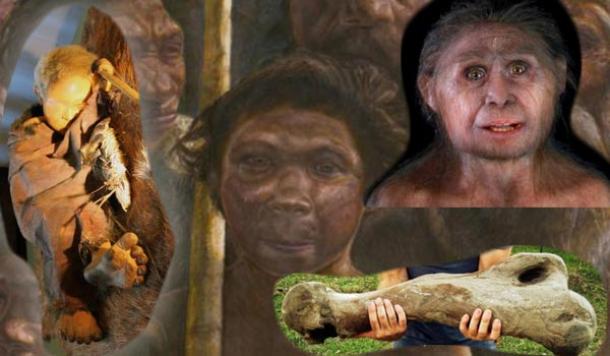

This year, huge strides were made in unravelling some of the mysteries of our ancient ancestors. For example, in the first ever analysis of a virtually complete Neanderthal genome, scientists were able to prove that rampant interbreeding occurred between Humans, Neanderthals and other species, resulting in an incredibly complex family tree. However, other studies revealed that there is so much more about our ancestry that we still don’t know, such as several studies pointing to the possibility of a completely unknown ancient human lineage. Here is a snap shot of some of the most significant studies to be made in 2013 relating to our ancient human origins.
What was revealed about Inter-breeding and how it formed our family tree
It was long believed that Neanderthals became extinct before modern Humans even emerged. However, this theory was later revised and it became accepted that Neanderthals and modern Humans had a cross-over of thousands of years, but never encountered each other. New evidence caused a revision yet again, this time saying that Neanderthals and modern Humans did indeed encounter each other but never interbred. And this year, in yet another shake-up of old theories, a number of studies have presented evidence that Humans and Neanderthals did interbreed and produce offspring.
In one of the most dramatic studies that have been seen in many years, scientists were able to extract DNA from a 50,000-year-old fossil that came from a Neanderthal woman found in a Siberian cave and piece together the Neanderthal genome to the same level of detail that has been achieved in modern day humans. The results showed that ancient human species, including Neanderthals, Denisovans and Homo sapiens mated with each other, resulting in an incredibly complex family tree. In fact, it was found that about 1.5 to 2.1 percent of the DNA of people with European ancestry can be traced to Neanderthals; proportions of Neanderthal DNA are higher among Asians and Native Americans, who also have small percentages of Denisovan DNA; six percent of the genome of Australian Aborigines and indigenous Papua New Guineans belong to the Denisovan species; and only 96 genes responsible for making proteins in cells are different between modern humans and Neanderthals.
This supports a unique finding made in a rock shelter in Lisbon, Portugal some years ago, in which archaeologists uncovered the bones of a four-year-old child, comprising the first complete Palaeolithic skeleton ever dug in Iberia. The significance of the discovery was that an analysis of the bones revealed that the child, who became known as ‘the Lapedo Child’, had the chin and lower arms of a human, but the jaw and build of a Neanderthal, suggesting that he was a hybrid, the result of interbreeding between the two species.
However, the study on the fossil found in the Siberian cave produced another totally unexpected finding – the Denisovans share up to 8 percent of their genome with a “super archaic” and totally unknown species that dates back around 1 million years. It appears that the Denisovans bred with a mystery species from Asia – one that is neither human nor Neanderthal. Traces of the unknown new genome were detected in two teeth and a finger bone of a Denisovan. In fact, there have been several studies this year which have all pointed to the fact that there is unknown species in our family tree that is yet to be identified.
A mysterious unknown lineage
A landmark study this year revealed the oldest known human DNA ever to be found, dating back approximately 400,000 years – substantially older than the previous earliest human DNA from a 100,000-year-old Neanderthal. It came from a hominin found in Sima de los Huesos, the “bone pit”, which is a cave site in Northern Spain. Initial analysis on the DNA revealed a complex and confusing interbreeding of species which took place in our ancient past. The scientists were able to use novel techniques to extract the DNA and determined an almost complete mitochondrial genome sequence of a 400,000-year-old representative of the Homo genus. The researchers then compared the DNA with Neanderthals, Denisovans, and present-day humans, and found that the individual shared a common ancestor with the Denisovans, a relatively newfound relative of humans who are thought to have lived in the vast expanse from Siberia to Southeast Asia. This was unexpected since the skeletal remains carry Neanderthal-derived features. In addition, the fossil was uncovered in Europe and not eastern Asia where it was believed the Denisovans lived. The investigators suggested that a currently unknown species brought Denisovan-like DNA into the Pit of Bones region, and possibly also to the Denisovans in Asia.
In yet another study pointing towards an unknown relative, an international team of scientists investigated the topic by examining the shape of a diverse range of dental fossils. Around 1,200 molars and premolars from 13 species or types of hominins (humans and human relatives and ancestors) were examined and results showed that none of the hominin species fit the expected profile of an ancestor of Neanderthals and modern humans. The researchers also presented evidence that the lines that led to Neanderthals and modern humans diverged nearly 1 million years ago, and not 350,000 years ago as previous studies based on molecular evidence suggested. It was found that none of the species that had been previously suggested as the last common ancestors of Neanderthals and Homo sapiens were a match, leading to the conclusion that another species existed that is yet to be discovered.
What we uncovered about our ancestors
Modern humans (Homo sapiens) are the only living member of the human lineage, Homo, which is thought to have arisen in Africa about 2 million years ago at the beginning of the Ice Age. But many other now-extinct human species were thought to once roam the planet, such as Homo habilis, Homo rudolfensis, Homo ergaster, and Homo erectus. However, in a dramatic discovery made this year, scientists have suggests that these early human ancestors many not have been multiple human species at all, but instead variants of a single species. The evidence comes from a skull found in Dmanisi, Georgia, the 5th skull to be discovered in the region. All the other skulls were found in the same location and date from the same time period (suggesting the same species), but looked quite different from each other. Until now it was believed that different characteristics among the Homo fossils, including those from Homo habilis, Homo rudolfensis and Homo erectus, showed they were distinct, different species. However, this research suggests the individuals belonged to the same species – according to the researchers, the differences between the Dmanisi fossils are no more pronounced than those between five modern humans. If this is the case, researchers will be forced to rewrite the classification system for early human ancestors.
What we discovered about hobbits
In 2003, the remains of an early human species, Homo floresiensis, were discovered on the island of Flores in Indonesia and were dated to have lived between 95,000 and 17,000 years ago. Nicknamed ‘hobbit’ for its small stature (approximately 3 feet 6 inches tall) and large feet, Homo floresiensis has been the subject of much debate and intense research to determine whether they represent a species distinct from modern humans, or whether the remains belonged to a modern human (Homo sapien) with a disorder such as microcephalia, a condition characterized by a small head, short stature and some mental retardation. This year, research using 3D comparative analysis confirmed that the Hobbit was indeed a distinct Homo species, but looked more like ‘us’ than previously realised.
What we learned about Neanderthals
This year, researchers found evidence in a collapsed rock shelter in Italy that Neanderthals kept organised and tidy homes with separate spaces for preparing food, sleeping, making tools and socialising. A new study also suggested that Neanderthals may have passed on their tool-making skills to modern humans. Dutch scientists discovered 50,000-year-old tools made from deer ribs in south-west France, which were believed to signify the transmission of knowledge and skill from Neanderthals to modern humans, as they are similar to others found at sites occupied by early modern humans at a later stage.
In a recent study, researchers found evidence in a cave in France that Neanderthals intentionally buried their dead. The individual had been carefully placed in a grave and great care had been taken to protect his body from scavengers. Other studies revealed that Neanderthals were capable of a form of modern language and speech.
The discoveries add to growing evidence that Neanderthals, once viewed as dim-witted and primitive, had a high level of technological ability and had intelligence and culture that was in fact on par with modern humans.
Human Origins in the Americas
Scientists made an incredible discovery in a streambed in southern Uruguay – a set of 30,000-year-old fossilised animals which show distinctive marks left by human tools. The immense significance of the discovery is that mainstream archaeology says that humans began arriving in the Americas between 13,000 and 15,000 years ago, and the Clovis people of North and Central America are generally considered the “first Americans.” But these results show that humans inhabited the Americas at least 15,000 years before previously thought.
In another finding, the DNA of a young boy found in eastern Siberia may hold the key to unravelling the mystery of where Native Americans originated. The 24,000 year-old remains revealed two major surprises for anthropologists when they completed an analysis of his genome. The remains of the boy, aged 3 to 4 years old, were found buried at Mal’ta near Lake Baikal in eastern Siberia. The team discovered that the boy’s DNA matched that of Western Europeans, showing that during the last Ice Age people from Europe reached much further east across Eurasia than previously believed. Incredulous at the results, they decided to test the DNA of an adult who died 17,000 years ago, found at a second Siberian grave site – they found the same markers of European origin. The results indicated that Europeans occupied Siberia during the Last Glacial Maximum approximately 20,000 years ago. But that was not all. The results also showed that a quarter of the boy’s DNA matched that of living Native Americans. Until now it was believed that Native Americans descended from East Asians in Siberia. Now it seems that they descended from a mixture of Western Europeans who had reached Siberia and the East Asian population. A European contribution to Native American ancestry could explain two longstanding mysteries about their origins. One is that many ancient Native American skulls, including that of the well-known Kennewick man, look very different from those of the present day population. Another is that one of the five mitochondrial DNA lineages found in Native Americans, the lineage known as X, also occurs in Europeans.
While huge progress is being made on a daily basis, scientists have a long way to go in resolving discrepancies in the fossil record. The studies cited above have added amazing insights into our past but have also shown how much we still don’t know. Let’s see what 2014 will bring…
~Ancient Origins

 Enjoy your Winter Solstice everyone, along with your Christmas and New Year. Lets all unite consciously to bring a great winter full of warmth, peace, health, and abundance of our daily needs.
Read on below a summary of our Winter Solstice:
The time around December 21 or 22 is a very important day for our planet and its relationship with the sun. December 21 is one of two solstices, days when the rays of the sun directly strike one of the two tropical latitude lines. In 2013 at precisely 12:11 p.m. EST (17:11 UTC) on December 21, 2012 winter begins in the Northern Hemisphere and summer begins in the Southern Hemisphere.
The earth spins around its axis, an imaginary line going right through the planet between the north and south poles. The axis is tilted somewhat off the plane of the earth’s revolution around the sun. The tilt of the axis is 23.5 degrees; thanks to this tilt, we enjoy the four seasons. For several months of the year, one half of the earth receives more direct rays of the sun than the other half.
The earth’s axis always points to the same point in the universe. When the axis points away from the sun from December to March (because of the relative location of the earth to the sun), the southern hemisphere enjoys the direct rays of the sun during their summer months. Alternatively, when the axis tilts towards the sun, as it does between June and September, it is summer in the northern hemisphere but winter in the southern hemisphere.
December 21 is called the winter solstice in the Northern Hemisphere and simultaneously the summer solstice in the Southern Hemisphere. On June 21 the solstices are reversed and summer begins in the northern hemisphere.
On December 21, there are 24 hours of daylight south of the Antarctic Circle (66.5° south of the equator) and 24 hours of darkness north of the Arctic Circle (66.5° north of the equator). The sun’s rays are directly overhead along the Tropic of Capricorn (the latitude line at 23.5° south, passing through Brazil, South Africa, and Australia) on December 21.
Without the tilt of the earth’s axis, we would have no seasons. The sun’s rays would be directly overhead of the equator all year long. Only a slight change would occur as the earth makes its slightly elliptical orbit around the sun. The earth is furthest from the sun about July 3; this point is known as the aphelion and the earth is 94,555,000 miles away from the sun. The perihelion takes place about January 4 when the earth is a mere 91,445,000 miles from the sun.
When summer occurs in a hemisphere, it is due to that hemisphere receiving more direct rays of the sun than the opposite hemisphere where it is winter. In winter, the sun’s energy hits the earth at oblique angles and is thus less concentrated.
During spring and fall, the earth’s axis is pointing sideways so both hemispheres have moderate weather and the rays of the sun are directly overhead the equator. Between the Tropic of Cancer and the Tropic of Capricorn (23.5° latitude south) there really are no seasons as the sun is never very low in the sky so it stays warm and humid (“tropical”) year-round. Only those people in the upper latitudes north and south of the tropics experience seasons.
~Matt Rosenberg
And take time to watch this amazing video by our beloved Manly P Hall, it is full of wisdom, and do not forget to get your notebook ready to take note!


From My heart to yours I issue love, and from you, My love goes out to all the world. And, yet, how to say this — there is no My love. There is no such thing. There is love, and love flows from one heart to another.
There is no other way.
There are no packages of love, and there is no ownership. In Truth, there is no ownership period.
What is owned in the world?
How can illusion be owned?
Many can have it. All can have it, and, yet, love is in no one’s possession.
It is everyone’s. It is all’s. Illusion does not stand on its own. Poof, and illusion is gone.
Who owns the rain? Or the sun? Who can keep anything to himself? I suppose one can keep food to himself. Eat it all up. But then it is gone. I suppose one could say the food has gone into his very cells. Yet who owns his body, fat or lean?
We could say that you own your soul. It is your soul, after all, and yet, and yet, are souls owned? Certainly, your soul is in your keeping. And your soul is something you do take with you, and, yet, bye and bye, your soul melds into Me. Yes, We can consider that you own Me. You own Me more than anything else. I am yours. My arms are wide open for you.
Now, getting back to My point, does a mother own her child? What is the merit in ownership? You may say you own your house. You may live in it all your life. Ultimately, you have leased your house. Whether you like it or not, it is a rental. Even if you live in a house deeded to you all of this life, it is a rental. You will leave it.
In another sense, We could say that you own the world. There is Truth in this. The world is yours to do with as you choose. The world is in your hands. You do own responsibility for it. Perhaps you own when you give. You can own up to that. You own the nightingale you free from the cage. You own its beauty as it flies and as it sings. You own its happiness. The freer the nightingale, the more you own her. You own what you give to her.
I like how I’m thinking. When you give a smile, you own it. When you give happiness, it is yours.
What you keep under lock and key, you do not own. Nope, you do not own diamonds. If you are attached to them, they own you. You pay insurance for them and for a vault in the bank. You may own the key yet only for a little while in the illusion of time and ownership.
And, so, We come back to the realization that you own nothing.
The richest man in the world owns nothing. He hardly owns his own freedom.
Who has more freedom in his life, the billionaire or the swimmer at the beach? Who owns the Ocean? One can surf. It may be said that you caught a wave, yet who can catch a wave? It can’t be put on the wall. Waves cannot be kept. Waves can only come and go, just as that is the truth of your body on Earth.
Your body is a fluctuating thing, and then it is no more.
And, yet, you, you the image of Me, you ARE.
~Creator: heavenletter
~~~~~~~~~~~~~~~
Navigate:
http://wetheonepeople.com/who-owns-the-sun/= this posting
~ the people

 THE silent life experiences on the surface through activity. The silent life appears as death in comparison with the life of activity on the surface. Only to the wise the life eternal seems preferable on account of the ever-changing and momentary nature of mortal life. The life on the surface seems to be the real life, because it is in this life that all joy is experienced. In the silent life there is no joy but only peace. The soul’s original being is peace and its nature is joy, both of which work against each other. This is the hidden cause of all life’s tragedy. The soul originally is without any experience; it experiences all when it opens its eyes to the exterior plane, and keeps them open, enjoying the life on the surface until satisfied. The soul then begins to close its eyes to the exterior plane, and constantly seeks peace, the original state of its being. The inward and essential part of every being is composed of fine vibrations, and the external part is formed of gross ones. The finer part we call spirit and the grosser matter, the former being less subject to change and destruction and the latter more so. All that lives is spirit and all that dies is matter; and all that dies in spirit is matter and all that lives in matter is spirit. All that is visible and perceptible appears to be living, although subject to death and decay, and is becoming every moment resolved into its finer element; but the sight of man is so deluded by its awareness of the seeming world, that the spirit which really lives is covered under the garb of matter and its true being is hidden. It is the gradually increasing activity which causes vibrations to materialize, and it is the gradual decrease of the same which transmutes them again into spirit. As has been said, vibrations pass through five distinct phases while changing from the fine to the gross; and the elements of ether, air, fire, water and earth each has a savor, color, and form peculiar to itself. Thus the elements form a wheel which brings them all in time to the surface. At each step in their activity they vary and become distinct from each other; and it is the grouping of these vibrations which causes variety in the objective world. Man calls the law which causes them to disperse destruction. Vibrations turn to atoms and atoms generate what we call life; thus it happens that their grouping, by the power of nature’s affinity, forms a living entity; and as the breath manifest through the form so the body becomes conscious. In one individual there are many fine and small beings hidden; in his blood, in his brain cells, in his skin, and in all planes of his existence. As in the physical being of an individual many small germs are born and nourished which are also living beings, so in his mental plane there are many beings, termed Muwakkals, or elementals. These are still finer entities born of man’s own thoughts, and as the germs live in his physical body so the elementals dwell in his mental sphere. Man often imagines that thoughts are without life; he does not see that they are more alive than the physical germs and that they have a birth, childhood, youth, age and death. They work for man’s advantage or disadvantage according to their nature. The Sufi creates, fashions and controls them. He drills them and rules them throughout his life; they form his army and carry out his desires. As the germs constitute man’s physical being and the elementals his mental life, so do the angels constitute his spiritual existence. These are called Firishtas. Vibrations as a rule have length as well as breadth; and they may last the least fraction of a moment or the grater part of the age of the universe. They make different forms, figures, and colors as they shoot forth, one vibration creating another; and thus myriad’s arise out of one. In this way there are circles beneath circles and circles above circles, all of which form the universe. Every vibration after its manifestation becomes merged again in its original source. The reach of vibrations is according to the fineness of the plane of their starting-point. To speak more plainly, the word uttered by the lips can only reach the ears of the hearer; but the thought proceeding from the mind reaches far, shooting from mind to mind. The vibrations of mind are much stronger than those of words. The earnest feelings of one heart can pierce the heart of another; they speak in the silence, spreading out into the sphere, so that the very atmosphere of a person’s presence proclaims his thoughts and emotions. The vibrations of the soul are the most powerful and far-reaching, they run like an electric current from soul to soul. All things and beings in the universe are connected with each other, visibly or invisibly, and through vibrations a communication is established between them on all the planes of existence; as an ordinary instance, if one person coughs in an assembly, many others begin to do the same, and the same is the case with yawning. This also applies to laughter, excitement and depression. This shows that vibrations convey the conditions of one being to another; therefore the seer knows of the past, present and future, and perceives conditions on all planes of existence. Vibrations work through the chord of sympathy existing between man and his surroundings and reveal past, present and future conditions; this explains why the howling of dogs foretells death, and the neighing of horses the approach of danger. Not only animals show this but even the plants in times of sorrow begin to die, and the flowers to fade, while during times of happiness they grow and flourish. The reason why plants and animals can perceive the vibrations and know of coming events while man is ignorant of them, is because he has blinded himself with egotism. The influence of vibrations is left on the chair on which one sits, in the bed where one has slept, in the house where one lives, in the clothes one wears, in the food one eats, and even in the street where one walks. Every emotion arises from the intensity of the vibrations, which when active in different emotions, the main cause of every emotion being simply activity. Every vibration while active raises the consciousness to the outermost surface, and the mist caused by this activity collects clouds which we call emotions. The clouds of emotion obscure the clear sight of the soul. Therefore passion is called blind. The excess of the activity of vibrations not only blinds, but weakens the will, and a weak will enfeebles the mind and body. It is the state of vibrations to which man is tuned that accounts for his soul’s note. The different degrees of these notes form a variety of pitch divided by the mystics into three distinct grades. First the grade which produces power and intelligence, and may be pictured as a calm sea. Secondly, the grade of moderate activity which keeps all things in motion, and is a balance between power and weakness which may be pictured as the sea in motion. Thirdly, the grade of intense activity, which destroys everything and causes all weakness and blindness; it may be pictured as a stormy sea. In the activity of all things and beings the pitch is recognized by the seer, as a musician knows the key in which any particular music is written. Man’s atmosphere tells of the grade of activity of his vibrations. If vibratory activity is properly controlled, man may experience all life’s joy, and at the same time not be enslave by it. It is most difficult to control activity when it is once started and on the increase, for it is like trying to control a runaway horse. But yet in the control abides the whole of what is called mastership. The saints and sages spread their peace not only in the place where they sit, but in even in the neighborhood where they dwell; the town or the country where they live is at peace, in accordance with the power of the vibrations they send out from their soul. This is the reason why association with good or bad and with those of the upper or lower classes has a great influence upon the life and character of man. The vibrations of thought and feeling create, procure, and prepare of themselves all the necessary means for their manifestation on the surface. For example a person may desire to eat fish and instead of ordering it might think strongly of it; his thought-vibrations thus speaking to the mental ears of the cook transmit his desire, and perhaps his strong feeling would even attract a fishmonger to the house. In this way the thoughts of sages work out their destiny, according to the strength, power and purity of their minds. A certain degree of thought-power is needed to bring about a certain result, as so much dynamite is required to blast a single rock, and an infinitely greater quantity is necessary to make a tunnel through a mountain. The length of time that the thought is held has also much to do with its accomplishment, for the thought-vibrations have to be active for a certain time to bring about a certain result. A certain length of time is required for the baking of a cake; if it is hurried the cake will be uncooked; with too great a heat it will burn. If the operator of the mental vibrations lacks patience then the power of thought will be wasted, even if it were half-way to its destiny, or still nearer to a successful issue. If too great a power of thought is given to the accomplishment of a certain thing it destroys while preparing it. In order to reflect thought and feeling on another, man should observe the same rule as in voice and word. The louder a person speaks in an assembly the more attention he attracts and all those present perforce give him a hearing. In the same way, if a Sufi sends forth the vibrations of his thought and feeling, they naturally strike with a great strength and power on any mind on which they happen to fall. As sweetness of voice has a winning power so it is with tenderness of thought and feeling. Thought-vibrations to which the spoken word is added are doubled in strength; and with a physical effort this strength is trebled. Reason is like fire, it gives light to the thought; but thought overheated loses its power, as heat can weaken the physical body. Reason gives birth to doubt, which destroys the thought-power before it is able to fulfill its destiny. The strength of thought-power consists in confidence or faith. Reason confuses, and doubts scatter the waves of thought-vibrations, which disperse and go off in different directions from lack of the strength that binds. One should never think or speak against one’s desire, for it weakens the thought-vibrations and often brings about contrary results. A variety of thoughts springing up at the same time naturally enfeebles the power of mind, for none of them has a chance to mature, just as twins are often imperfect and triplets seldom live. The disharmony between one’s desire and one’s ideal always causes a great confusion in life, for they constantly work against each other. When a person speaks, thinks, or feels either harshly or kindly of another, it reaches the spirit of that one either consciously or unconsciously by the power of vibration. If we happen to be offended with someone and do not show it in speech or action, yet it still cannot be hidden, for the vibrations of our feeling will reach directly to the person in question, and he will begin to feel our displeasure, however far away he may be. The same is the case with our love and pleasure: however we may try to conceal it in speech or action, it cannot be hidden. This explains the old adage that even walls have ears, which really means that even the wall is not impervious to vibrations of thought. Sufis give special attention to the good and bad wishes of people. They strive continually to attract the good wishes of others whether worthy or unworthy, by every means in their power. Intensity of activity produces strong vibrations named in Sufi terms Jalal; gentleness of activity causes mild vibrations called Jamal. The former activity works as strength and power, the latter as beauty and grace. The conflict of both these forces is termed Kamal, and causes nothing but destruction. The standard of right and wrong, the conception of good and evil, and the idea of sin and virtue are understood differently by the people of different races, nations, and religions; therefore it is difficult to discern the law governing these opposites. It becomes clear, however, by understanding the law of vibrations. Every thing and being on the surface of existence seem separate from one another, but in every plane beneath the surface they approach nearer to each other, and in the innermost plane they all become one. Every disturbance therefore, caused to the peace of the smallest part of existence on the surface, inwardly affects the whole. Thus any thought, speech or action that disturbs peace is wrong, evil, and a sin; if it brings about peace it is right, good, and a virtue. Life being like a dome, its nature is also dome-like. Disturbance of the slightest part of life disturbs the whole and returns as a curse upon the person who caused it; any peace produced on the surface comforts the whole, and thence returns as peace to the producer. This is the philosophy of the reward of good deeds and the punishment of bad deeds given by the higher powers.
|
